Allergy Friendly Flowers: Low-Pollen, Low-Scent Bouquets That Work
Allergy friendly flowers explained for Bangkok: which blooms shed less pollen, which to skip, how to keep vase water clean, and a brief to copy.
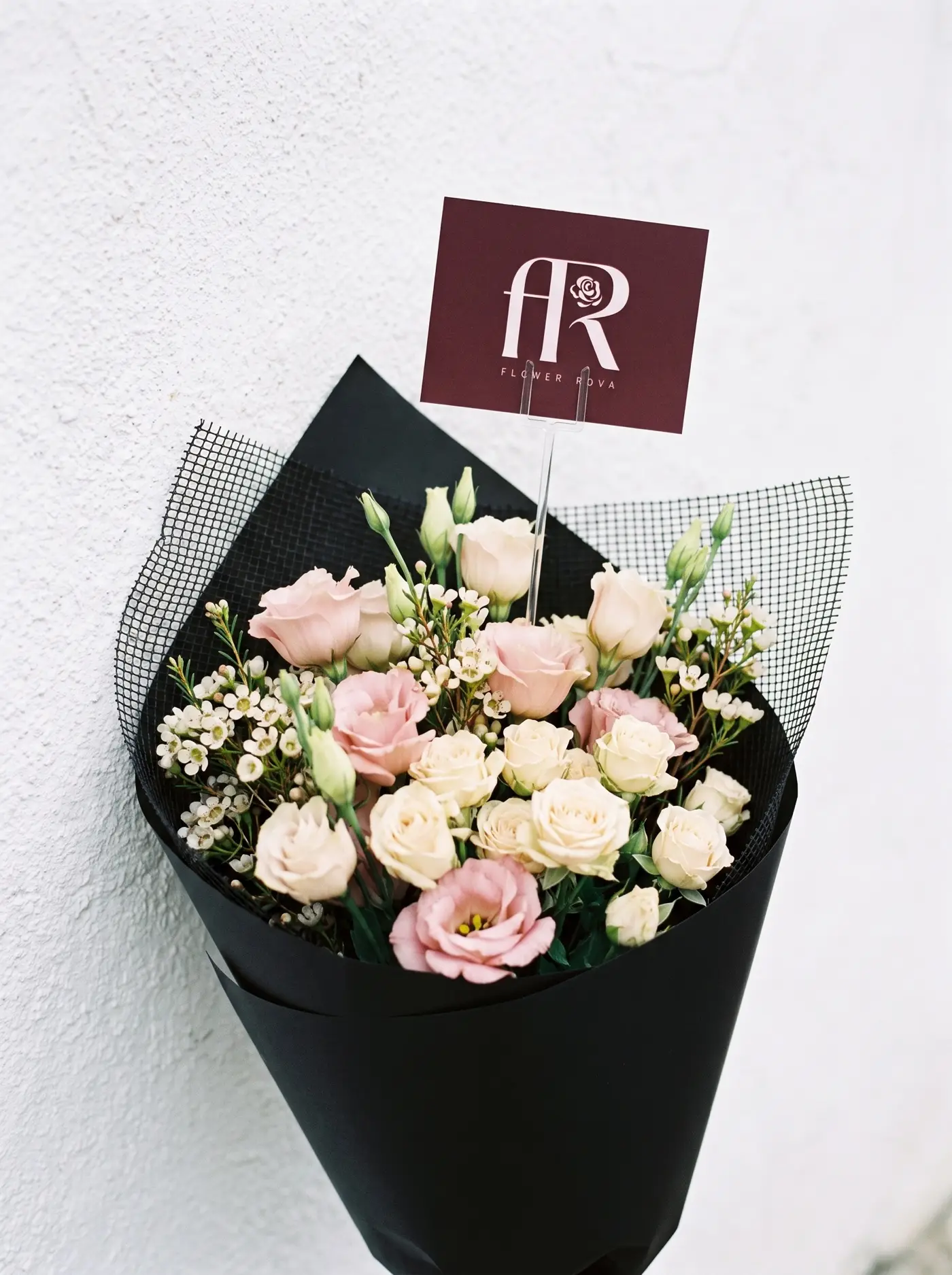
If you are sending flowers to someone with allergies or asthma, or choosing for yourself, the useful question is not "which flowers are safe" but "what exactly sets this person off". This guide to allergy friendly flowers separates the three things that get lumped together, which are pollen, scent and mould. It then shows which low pollen flowers we would choose, which we would leave out, and how to brief a florist for a fragrance free bouquet. We are florists, not doctors: nothing here is medical advice, and anyone with diagnosed allergy or asthma should ask their own doctor first.
Allergy friendly flowers: what pollen, scent and mould each do
People say "I'm allergic to flowers" about at least three different problems, and each one has a different fix. Treating them as one thing is how a well-meant bouquet ends up on a balcony.
Pollen: the classic hay fever trigger
Pollen is the fine dust plants release to reproduce, and wind-pollinated plants such as grasses and many trees produce a lot of it. The American Academy of Allergy, Asthma & Immunology's guidance on choosing plants for allergic patients says insect-pollinated plants generally produce lower quantities of pollen than wind-pollinated ones, and also says that complete pollen avoidance is unrealistic. It is a gardening document, but the logic carries over: showy, insect-pollinated flowers beat anything grassy or wispy.
The University of Worcester's pollen research unit lists the main allergenic types in the UK, and the headline is that tree and grass pollen, not typical bouquet flowers, drive most hay fever. That tells you where to be careful in a bouquet: filler grasses, wheat heads and seed plumes.
Scent: irritation, not always allergy
Fragrance is a separate problem. A strongly scented bloom can bring on headaches, sinus pressure or a runny nose in people who have no allergy at all. A University of Texas Medical Branch article summarising survey work reports that close to 30 per cent of people find scented products on others irritating, and notes that these symptoms are usually chemical irritation rather than true allergy.
In an Australian survey of 1,098 adults, 91.5 per cent of people with multiple chemical sensitivity reported fragrance sensitivity. The takeaway for a gift: if your recipient avoids perfume or air fresheners, treat a heavily scented bouquet the same way.
Mould and bacteria: the part nobody mentions
The third trigger is not the flower at all. Stagnant vase water, slimy stems and damp leaves can grow bacteria and mould, and a humid room speeds that up. Someone who sneezes at a bouquet on day five may be reacting to the vase, not the petals, and this is the easiest trigger to control; our guide to how to clean a flower vase is the routine.
Contact reactions are a fourth, smaller category
Some people react on the skin rather than in the nose. A published case report describes persistent allergic contact dermatitis in florists exposed to Alstroemeria, caused by tulipalin A, with fissured fingertips and nail changes. A review of contact allergy to the daisy family, Asteraceae, notes that sesquiterpene lactones can sensitise the skin and that symptoms range from eczema to hay fever, asthma and, rarely, anaphylaxis.
Low-pollen choices: roses, orchids, hydrangea and tulips
These are the sensible first picks when someone says "I get hay fever, but I'd love flowers". None of them is a promise.
Roses
Roses are insect-pollinated, and cut roses are usually sold in tight, closed bud rather than as open, pollen-shedding blooms. Scent is the variable: some varieties are heavily perfumed, others close to faint, and we cannot promise that any particular rose is unscented. The ASPCA lists the genus as non-toxic to dogs, cats and horses.
For the quietest rose option, ask for tightly closed buds and a single colour. A bouquet of 20 white-pink roses is ฿3,299 delivered, and the white-pink blend tends to read as soft rather than showy. The full range of rose bouquets comes in red, pink, white-pink and orange; say in your order note that scent matters.
Orchids
Orchids suit people who want a gift that looks serious but does not shed. Moth orchids, or phalaenopsis, are described by the Royal Horticultural Society as the most popular indoor orchids with long-lasting flowers, and many have little scent. Others do, so ask the florist which variety is in the bunch.
Look at our orchid designs, and if the recipient would rather have a plant than a cut stem, the potted plants range includes phalaenopsis in white and pink. A potted plant has damp compost, so empty the saucer and let air move around it.
Hydrangea
Hydrangea is the flower we reach for when someone wants volume without fuss. The big mophead blooms are made up mostly of sterile florets, which is why they carry so little visible pollen. The RHS describes mopheads as full round heads of large petals, as distinct from lacecaps, which have tiny central flowers ringed by large ones. The mophead style is the one to ask for if pollen is the worry.
Hydrangea drinks heavily, so keep the vase topped up; see our hydrangea bouquets for current sizes.
Tulips, with a caution
Tulips are insect-pollinated and have a light, clean scent, so they usually make the low-pollen list. The caution is on the skin side. The ASPCA lists tulips as toxic to dogs, cats and horses because of tulipalin A and B, the compound family behind the florist dermatitis report above. Tulips suit someone with hay fever, but not a person with skin reactions to cut stems or a home with cats (cat safe flowers covers the pet side). See the current tulip bouquets.
A quick comparison
| Flower | Pollen risk | Scent | Watch for |
|---|---|---|---|
| Roses (closed buds) | Low | Varies by variety, often moderate | Ask about scent, remove outer petals if bruised |
| Phalaenopsis orchid | Low | Often faint, varies | Damp compost if potted |
| Mophead hydrangea | Low | Light | Heavy water use, slime on submerged leaves |
| Tulips | Low | Light | Skin reactions, toxic to pets |
The ones to skip: lilies, chrysanthemum, heavy-scent blooms and grasses
If the goal is allergy friendly flowers, this is the shorter and more useful list: good vase care can rescue a mediocre choice, but not a heavily scented, pollen-heavy one.
Lilies
Lilies are the textbook skip. Their anthers are large, loaded with orange pollen that stains clothes and tablecloths, and the scent is strong enough to fill a small room. For anyone with a pet cat, they are a hard no on a separate ground: the ASPCA lists the Easter lily as toxic to cats, and the US FDA warns that the entire plant, including pollen and vase water can poison a cat. We do not recommend lilies for a home where a cat may be present. We stock a lily range; it is not for this brief.
Chrysanthemum, gerbera and the daisy family
Chrysanthemums, gerberas, sunflowers and daisies all sit in the Asteraceae family that the contact-allergy review above links to skin sensitisation, hay fever and asthma symptoms. Not everyone reacts, but if your recipient already reacts to ragweed, daisies or chamomile, leave these out.
Heavy-scent blooms
Scent is not a defect in a flower, but it is the wrong feature for this brief. The RHS describes jasmine as renowned for its fragrance, and the Missouri Botanical Garden calls Arabian jasmine, the species behind many Thai garlands, exceptionally fragrant. The RHS also notes peonies are often spicily scented. A jasmine garland is beautiful and entirely wrong for someone whose migraines are scent-triggered, and the same goes for scented add-ons such as candles.
Grasses, wheat and seed heads
Grass pollen is one of the main hay fever triggers in the Worcester list. Pampas, wheat, bunny tails and feathery filler grasses are fashionable in dried arrangements and in modern hand-tied bouquets, and they are the elements most likely to carry grass pollen or shed fine dust. Ask directly whether there are grasses or seed heads in the design, and have them left out.
Dried and preserved flowers: better or worse for allergies?
The tempting argument is that dried and preserved flowers are the allergy friendly flowers by default, because there is no fresh pollen and no vase water. It is half right.
What dried flowers do well
A dried arrangement has no water to go stagnant, so the vase-bacteria problem disappears. Dried designs without lavender or grasses are a reasonable choice for someone whose trigger is mould or perfume. See our dried flowers for current styles.
What they do badly
Dried material sheds. Petals, seed heads and fine dust fall onto the surface beneath, and anyone who vacuums regularly because of dust sensitivity or asthma will notice. Dried grasses such as pampas and wheat bring the grass-pollen question straight back in. Dried lavender is scented by design. The NHS hay fever page advises damp dusting and regular vacuuming, which a dusty dried arrangement adds to.
Preserved flowers: ask what was done to them
Preserved roses are fresh roses treated to stay soft and flexible, and there is no single standard treatment. Some are dyed or lightly scented, and we do not know a maker's process unless they tell us. Our preserved flower range is the place to look. Ask what was used to preserve the roses and whether they are scented.
Humidity matters too: our note on preserved and dried flowers in Bangkok humidity says to follow the maker's care instructions in a damp room, because a wet arrangement can grow mould.
Bangkok's air, air-conditioning and indoor allergens
Most hay fever advice assumes a temperate spring peak. The NHS page says UK symptoms are worst from late March to September, when pollen counts are highest. We have not found a reliable published pollen calendar for Bangkok, so we will not claim one. What we can describe is the indoor setting where your flowers sit. If that setting is the bedroom, see flowers in the bedroom as well; if it is a nursery, baby shower flowers applies the same low-scent, low-pollen rules.
Air-conditioned homes and offices
Most Bangkok condos and offices run air-conditioning for much of the day, with windows closed. The US Environmental Protection Agency states that indoor pollution sources are the primary cause of indoor air problems and that inadequate ventilation raises pollutant levels, with immediate effects including eye, nose and throat irritation and aggravated asthma. In a closed room, whatever the bouquet releases stays there. That is an argument for lower-scent, lower-shed choices, not against flowers altogether.
Haze days
A 2019 study of 17 Bangkok houses found mean indoor PM2.5 of 19.85 micrograms per cubic metre in haze periods against 11.40 in non-haze periods, showing that indoor air in Bangkok tracks outdoor haze even with the windows shut. If your recipient has asthma and the AQI is bad, a dried arrangement shedding fine dust is a poorer idea than a vase of closed-bud roses.
Do flowers clean the air?
No. The American Lung Association explains that the 1989 NASA study showed plants cleaning air in a sealed chamber, but those results do not translate to real homes. It quotes a 1992 EPA memo saying matching the chamber's rate would take 680 plants in a typical house.
A worked example: the Ari condo
Say a friend in a one-bedroom condo in Ari has told you she has hay fever and uses an inhaler on bad haze days. Her windows stay shut, and the air-conditioner runs all evening. You would not send lilies, jasmine or a wheat-and-pampas mix. You would send ten or fifteen closed-bud white-pink roses, ask the florist to leave out grasses and fillers, and put a note on the card to change the water every two days. Ten stems are ฿2,399. Our guide to sending flowers to a Bangkok condo covers the juristic-office handover; check that with her first.
Vase hygiene: mould, bacteria and why water changes matter
A low-pollen flower in dirty water can be worse than a pollen-heavy flower in clean water.
What is actually growing in the vase
For a sensitive recipient the water can matter as much as the flower, since Cornell researchers found the bacteria in vase water becoming more diverse over a week, and our guide to how to clean a flower vase explains the study and why cloudy water and slimy stems mean it is time to start again.
A simple routine
The Purdue University College of Agriculture's floral design instructor advises topping up water daily, changing the water with floral food every two to three days, and re-cutting stems by one to two inches. For an allergic household, we would add:
- Wash the vase with soap and hot water before every new bouquet, not just rinse it.
- Strip any leaves that would sit below the waterline, since submerged leaves rot first.
- Change the water every two days in Bangkok's heat, and sooner if it clouds.
- Wipe the vase rim and the surface under it, where drips become damp patches.
- Bin the bouquet when stems go slimy or the water smells, rather than trying to revive it.
Our post on why flowers die in three days covers cloudy water and bad smells, and making roses last in Bangkok heat covers cutting and cooling.
Hospitals, clinics and offices: rules worth asking about
Allergy is only one reason a venue may say no to flowers. Infection control is often the bigger one, and the rules differ by place.
Hospitals
We do not know any specific Bangkok hospital's flower policy. UK trusts show that policies are set locally and can be strict. University Hospital Southampton asks visitors not to bring flowers or plants for hygiene and infection-prevention reasons, Hampshire Hospitals says flowers are not permitted, and North Cheshire and Mersey explains that flowers and their water can encourage bacteria and mould and may trigger allergies. None of these is a Thai hospital, but they show why you ask first.
Our guide to sending flowers to a Bangkok hospital lists the questions to put to the ward, and our get-well flowers page shows what we offer once a ward says yes. Removing pollen and scent does not override an infection-control rule.
Offices
In an open-plan office, the person with the allergy may not be the person who receives the flowers. Say a bouquet goes to a team on the 14th floor of a Sathorn office tower, and a colleague three desks away is sensitive to fragrance. Before an office delivery, ask whoever manages reception or the team whether there is a scent policy, and who will change the water. Unscented flowers in closed bud, such as white-pink roses, are the safer default for a shared desk. Our note on office flower subscriptions covers regular office arrangements.
If chocolates are in the gift
Many of our gifts come with sweets, and chocolate is a separate allergen check: the US FDA lists the nine major food allergens as milk, eggs, fish, crustacean shellfish, tree nuts, peanuts, wheat, soybeans and sesame. Ask the recipient, or choose flowers alone, if you are unsure.
An allergy-aware bouquet brief to copy
Paste the version below into LINE or WhatsApp as is.
The copyable brief
Hi, I'd like a hand-tied bouquet for someone with hay fever and a sensitivity to strong scent. Please use closed or tight buds, avoid lilies, chrysanthemum, jasmine, gerbera and any grasses, wheat or seed heads, and leave out any scented add-ons. Roses, hydrangea or orchids are fine. It is going to a condo in Thonglor, and I will confirm the delivery time with the recipient. Please tell me exactly which flowers are in it.
The last line matters, because it lets you check the stems against what you know about the recipient. We will tell you what is in a design, and we will not call it "hypoallergenic" or "allergy-safe", because we cannot promise that for any person. To choose each stem yourself, the build-your-own tool lets you pick flowers one at a time and leave out everything on the skip list.
Card lines that carry the care note
Allergy friendly flowers work better when the card says what was left out and what to do with the vase.
- "Closed buds only, no lilies, no grasses. Water change on Thursday, then I'll check in."
- "Chosen for the hay fever, not in spite of it. Strip the lower leaves and keep it away from the air-con vent."
- "Unscented on purpose. Fresh water every two days and it should see out the week."
- "If this still sets you off, say so. Next time I'll bring lunch instead."
Choosing by situation
| Situation | What to send | Why |
|---|---|---|
| Friend with hay fever, home delivery | Closed-bud roses or mophead hydrangea | Insect-pollinated, little visible pollen |
| Scent-sensitive colleague | Phalaenopsis orchid plant or closed-bud roses, variety confirmed | Little or no perfume |
| Asthma, dusty home | Fresh roses, changed water, no dried | Dried material sheds dust |
| Mould-sensitive recipient | Dried or preserved, kept dry | No vase water to go stagnant |
| Cat in the home | Roses (ASPCA-listed non-toxic); no lilies or tulips | Lilies are toxic to cats, tulips to cats and dogs |
| Hospital or clinic | Ask the ward first | Many sites refuse flowers outright |
A second worked example: the office thank-you
Imagine a manager in a Silom office who wants to thank an assistant with asthma after a long project. She asks first: "I'd like to send you something small, are flowers okay or would you prefer something else?" The answer is yes to a single orchid. She orders a potted phalaenopsis from our plant range, writes a card that says "Thank you for the Friday save. No water needed until it dries out", and has it sent to the front desk. Plant prices are on the page.
When flowers are the wrong move
Flowers are the wrong gift when the recipient has said they are allergic and you are not sure which flowers are safe, when they live with someone who has severe asthma and a closed-window flat, or when a hospital ward or clinic has said no. In those cases a card, a meal or an offer to help is kinder. If unsure, ask the recipient directly; a person with allergies has usually learned to answer that question and would rather be asked than surprised. If they say yes, same-day delivery covers bouquets up to 40 roses ordered by 9 pm Bangkok time, and the delivery page has the rest.
Frequently asked questions
What are the best allergy friendly flowers?
There is no flower that is safe for everyone, but closed-bud roses, mophead hydrangea, phalaenopsis orchids and tulips are the usual hay fever flowers, because they are insect-pollinated and shed little visible pollen. Scent and skin reactions still vary by person. Ask your recipient, and ask the florist for the exact flower list before you pay.
Are roses hypoallergenic flowers?
We would not use that word for any flower, and "hypoallergenic flowers" is a shop label rather than a tested category. Roses are insect-pollinated and tight-budded cut roses shed little pollen, but some varieties are strongly scented and a few people react to handling stems. If scent is the problem, ask for lightly scented or closed buds and confirm the specific variety.
Can I send flowers to someone with hay fever?
Often yes, if you choose carefully. Skip lilies, chrysanthemum, gerbera, jasmine and any grasses or wheat. Choose roses, hydrangea or an orchid, and keep the vase water clean. The NHS lists not keeping fresh flowers in the house as self-care advice for hay fever, so ask first and accept a no gracefully.
Are dried flowers better for allergies than fresh?
Dried flowers avoid stagnant vase water, so they suit mould-sensitive people. They shed dust, and dried grasses bring grass pollen back in. Preserved flowers are treated, sometimes dyed or scented, so ask what was used. Neither is automatically better. It depends on whether the person reacts to dust, mould, scent or pollen.
Can I send flowers to someone with asthma?
Ask them first and let them decide; if they are unsure, that is a question for their doctor, not a florist. If they say yes, choose unscented closed-bud roses or a potted orchid, leave out grasses and fillers, and suggest the vase goes in a ventilated room rather than a closed bedroom. If they would rather not have fresh flowers in the home, believe them and choose a different gift.
Can flowers be sent to a hospital if the patient has allergies?
Only if the ward allows flowers at all. Several UK hospitals refuse them for infection-control reasons, and removing pollen or scent does not change that. Ask the ward before ordering. If you want help choosing flowers for allergy sufferers once a ward has said yes, message us with the details and we will list exactly which stems go in.