

Cat Safe Flowers: Bouquets for Homes With Cats (and Dogs)
Cat safe flowers for Bangkok condos: the one hard rule on lilies, what to pick, the grey list, dogs, vase water, and what to ask before you send.
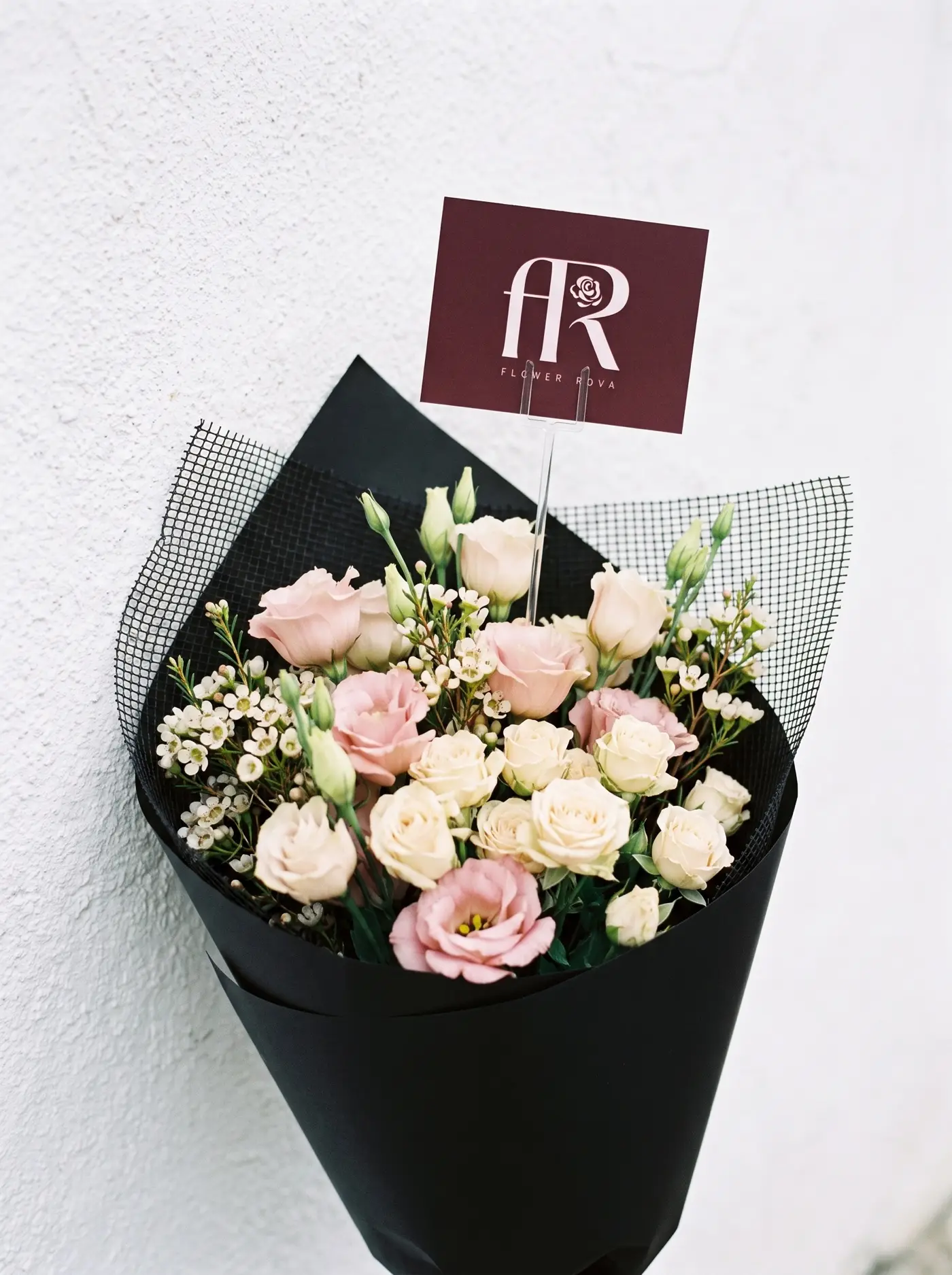
A bouquet is the easiest gift to get wrong for a cat owner, because the danger hides in a pretty, ordinary-looking stem. This guide to cat safe flowers gives you one rule you never break, a short list of flowers that are widely treated as low-risk, a grey list to leave out when you are unsure, and the Bangkok habits that keep a vase out of paws and whiskers.
It serves the condo owner who wants flowers on the table and the sender who wants the gift to be welcome. Both start in the same place: ask what is in the bouquet before it arrives, not after the cat has had a taste.
Cat safe flowers: why lilies are the one hard rule
If you remember one line from this page, make it this: no lilies in a home with a cat, and no lilies in a bouquet going to a cat owner. Not in the centre, not as a single accent stem, not "just for the scent".
The ASPCA's guidance on which lilies are toxic to pets is blunt. Its poison-control team says true lilies of the Lilium group (Asiatic, Easter, Stargazer and Oriental types) and daylilies can cause severe kidney injury in cats. The risk is not limited to chewing petals. A cat can also be harmed by drinking the vase water or by grooming pollen off its own coat after brushing past a stem, which is how a cat that never touches the flowers still gets caught.
What the sources agree on
Three sources say the same thing:
- The ASPCA's entries for the Easter lily and the tiger lily list both as toxic to cats, with vomiting, lethargy and kidney failure among the signs, and say death is possible.
- Pet Poison Helpline states that every part of a Lilium lily is toxic to cats: leaf, stem, flower, pollen, vase water and root. It adds that early treatment is vital.
- The US FDA, in a piece on lilies and curious cats, says a small amount of leaf or petal, licking pollen from fur, or drinking vase water can cause fatal kidney failure in under three days. The toxin has not been identified.
With no known toxic compound there is no "safe part" to cut off, no anther to snip, no water change frequent enough. The only fix is not to have the flower in the house.
The word "lily" is a trap
Shops use "lily" loosely, so check the label, not just the name. The ASPCA page above says Peruvian lilies, the alstroemeria in many mixed bouquets, may cause stomach upset but are not expected to cause life-threatening organ injury. Useful, but not a free pass in a cat home. Calla and peace lilies are a different group again: the FDA piece linked above files them as less harmful than true lilies, because they contain insoluble calcium oxalate crystals that irritate the mouth when chewed rather than anything that reaches the kidneys. Less harmful is not harmless. The working rule is simple: if it is called a lily and a cat lives there, leave it out. Our own lilies collection is for homes without cats.
How lilies sneak in
They arrive in a "mixed seasonal" bunch where the shop picks the stems, in an office arrangement carried home, or in a gift from someone who did not know there was a cat. The fix is one sentence at the point of ordering: "cat at home, no lilies". Our explainer on the florist's choice bouquet shows why that note matters when you are not choosing the stems yourself.
Safe choices: roses, orchids, sunflowers and gerbera
The flowers most Bangkok bouquets are built around are also the cat safe flowers with the best record. Each claim below says how far a linked source backs it, because that matters when an animal is involved.
Roses
On "are roses safe for cats", the ASPCA's rose entry is straightforward: roses (Rosa species) are listed as non-toxic to dogs, cats and horses. That makes them our default for a pet household, in any colour. A bouquet of 20 pink roses carries none of the lily risk.
Two caveats keep this honest. "Non-toxic" does not mean "good to eat": a cat that swallows a mouthful of petals can still bring them back up. And thorns and cut ends are a mechanical risk, not a chemical one, once a stem is tipped off a table. Browse the sizes on the roses page and pick one that fits the table you actually have.
Orchids, sunflowers and gerbera
Phalaenopsis, mokara and dendrobium are the orchids you will meet in Bangkok, and our orchids collection includes sprays that sit well in a narrow vase. The sunflowers page and the gerbera pieces in the gerbera, carnation and chrysanthemum range are sturdy and hold their shape in Bangkok's heat.
Our working view is that all three are low-risk for cats and dogs. We have no ASPCA page for them in our source set, so treat that as a florist's judgement, not a veterinary clearance. Look up the exact species on the ASPCA's plant database, and ask your vet if your cat chews anything green. That last range also carries carnations and spray chrysanthemums, which belong on the grey list below; for a cat home, choose the gerbera and ask us to leave the mums out.
Quick reference: cat safe flowers and the grey list
| Flower | Status in cat and dog homes | Evidence | Practical note |
|---|---|---|---|
| Roses | Listed non-toxic to cats, dogs, horses | ASPCA entry, linked above | Mind thorns and cut ends |
| Orchids | Florist's view: low-risk | No linked source; check species | Narrow sprays are easy to anchor |
| Sunflowers | Florist's view: low-risk | No linked source; check species | Heavy heads tip light vases |
| Gerbera | Florist's view: low-risk | No linked source; check species | Ask about the greenery with it |
| Lilium lilies | Toxic to cats | ASPCA, Pet Poison Helpline, FDA | The one hard rule: never |
| Tulips | Toxic to cats and dogs | ASPCA entry, linked below | Leave out of pet homes |
| Hydrangea, chrysanthemum, carnation | Grey list | No linked source | Leave out unless confirmed |
The grey list: tulips, hydrangea, chrysanthemum and why
The grey list is not the lily rule. These flowers are not the single-sip emergency lilies are for cats, but they are things you do not want an animal eating.
Tulips
The ASPCA's tulip entry lists tulips as toxic to dogs, cats and horses because of the compounds tulipalin A and B. It names vomiting, depression, diarrhoea and hypersalivation as signs, and says the highest concentration of toxin is in the bulb.
A cut tulip has no bulb, so exposure is lower than for a pet digging up a planted one. The plant is still listed, though, and tulips drop petals within days, which is when a cat takes an interest. In a pet home, pick roses instead.
Hydrangea, chrysanthemum and greenery
Hydrangea and chrysanthemum are on the grey list for a plainer reason: our source set has no veterinary entry for either, so we claim nothing about severity, and a flower we cannot confirm is a flower we leave out of a pet home. Purdue's floral-design instructor gives the same advice in a Q&A on caring for bouquets: some flowers are toxic to children and pets, so consult a poison-control list rather than guess. If the recipient has no pets, you will find hydrangea in the hydrangea collection.
The most overlooked part of a bouquet is the green filler. Eucalyptus, ruscus, asparagus fern and baby's breath are common, and our source set gives no pet verdict on any of them, so ask the florist to name them, or order roses with plain wrapping.
If a grey-list bouquet is already in your home, move it somewhere the pet cannot reach and ask your vet whether anything needs attention.
Dogs: the overlap and the differences
The overlap is large. Roses are listed non-toxic to dogs as well as cats, and tulips are toxic to both. If you have a cat and a dog, use the cat's list, which is the stricter one.
Where dogs differ
Lilies are the clearest difference. The FDA piece linked above says dogs only get minor stomach upset from lilies, and the ASPCA's Easter lily entry lists the plant as non-toxic to dogs and horses, adding that cats are the only species known to be affected. For a mixed household, or a recipient whose pets you do not know, that is an argument for the cat rule, not against it.
Dogs chew, cats groom
Dogs counter-surf, take a bouquet off a low table and chew stems to bits. Cats knock a vase off a shelf for sport, drink from it, and lick pollen off their coats.
For dog homes, protect against the physical side: a heavy vase, stems clear of the table edge, and any sweets that came with the flowers out of reach. A gift set may arrive with chocolates or cake, and food that is fine for you is not automatically fine for a dog. Ask us what an edible gift contains through the contact page, and ask your vet about the rest. For a dog-only home, dog safe flowers means roses plus the orchid, sunflower and gerbera family on the florist's-view basis, with tulips and the grey list left out.
Vase water, flower food and curious pets
Why cats go for the water
A vase of cool, clear water on a counter looks like a good bowl to a cat. For lilies, the ASPCA, FDA and Pet Poison Helpline all say vase water is part of the danger.
With roses and other low-risk stems the water is a hygiene question, not a toxin one: Cornell researchers found vase-water bacteria growing more varied over a week, which says nothing about illness in a cat but is reason enough to keep week-old water out of reach, and the full method is in how to clean a flower vase.
A water routine that fits a pet home
The pet-specific version of that routine is below.
The same Purdue Q&A advises topping up water daily, changing it with floral food every two to three days, and re-cutting stems by an inch or two. Add pet-specific habits on top:
- Strip leaves below the waterline, as the RHS conditioning guide advises. They rot first.
- Use a vase with a narrow neck or a heavy base. A wide jug is an invitation.
- Wipe spills at once. A puddle on the table is the same water as the vase, and a cat will find it first.
- Keep the flower-food sachet and any opened packet in a closed cupboard.
Skip the home remedies
NC State Extension's cut-flower advice says commercial floral preservative works better than home remedies, and that a few drops of bleach kill bacteria but too much kills plant cells. In a pet home that is a second reason to skip kitchen-cupboard experiments: you do not want a bleach solution in a vase a cat might drink from. For climate-specific habits, see our notes on keeping roses fresh in Bangkok heat.
Placement in a Bangkok condo with a cat
Cat safe flowers still need a cat-safe spot. Many Bangkok condos are compact: a small kitchen, a bedroom door that closes (see flowers in the bedroom for what a vase does overnight), and a balcony that may or may not be safe for a cat. Pet-proofing is as much about where the vase goes as what is in it.
Think vertically, then close a door
A cat is not stopped by a table or shelf. The most reliable placement is a room the cat cannot enter, which in a condo is often the bedroom or bathroom with the door shut. In rough order of preference:
- A room the cat can be kept out of while you are away.
- A closed glass-fronted shelf or a high ledge the cat has not learned to reach.
- A heavy ceramic vase on a table the cat has not yet climbed.
In a studio, five or ten roses in a narrow vase beat a big bowl on the dining table. The build-your-own tool lets you size the bouquet to the surface.
Air conditioning, balconies and sills
Flowers last better in a cooler, steadier room, away from direct sun and the cold blast of a split unit, and the bedroom you can shut usually suits both. A balcony is the worst spot: heat, wind, and a cat that wants to see outside. Keep vases off sills above a drop.
When flowers go to the juristic office
If flowers arrive while you are out, reception or the juristic office may hold them until you collect them. For a pet owner that is a quiet advantage: the bouquet stays away from the cat until you have unwrapped it. Our guide to sending flowers to a Bangkok condo explains the handover and what to confirm with the building.
Take the wrap off first
The matte black wrap and black mesh on a FlowerRova bouquet are for the delivery, not the table. Take them off as soon as the bouquet is in your hands and bin them where the cat cannot reach.
Sending flowers to a pet owner: what to ask first
Ask casually, ask early
"Do you have pets at home? I want whatever I send to be safe for them" works in a chat or in person, and it is an easy question to answer. Ask about hay fever in the same breath; allergy friendly flowers covers that side. To keep the gift a surprise, ask a side question: "Are you a cat person or a dog person?"
If you cannot ask
If you cannot ask, as with a client or colleague, these defaults keep you inside cat safe flowers without the conversation:
- Roses only, in one colour, with plain wrapping and no filler you cannot name.
- A note on the order: "cat at home, no lilies, no tulips".
- If in doubt about greenery, ask the florist to leave it out.
Two worked examples
A new flat in Ari. Mook wants to send flowers to a friend, Ploy, who has just moved into a condo near Ari BTS with two cats. Mook has no idea what is in a mixed bunch, so she picks ten white-pink roses at ฿2,399, asks for no filler, and checks Ploy's juristic office hours before ordering. Same day works for bouquets up to 40 roses ordered by 9 pm Bangkok time, so she can order that afternoon. The card reads: "Housewarming. Roses only, nothing the cats need to worry about. Come for dinner on Saturday." Ploy sets them on a high shelf in the bedroom and shuts the door.
A client with a dog. An agency owner wants to thank a client who has mentioned a labrador at home. He does not have the client's home address and does not go looking for it. He orders twenty orange roses at ฿3,299 to the client's office tower reception in Sathorn, with the note "Dog at home. No lilies or tulips, please." The card: "Thank you for the last quarter. A small thing for the desk." The client carries the bouquet home on the BTS that evening and puts the vase above the dog's reach.
When not to send flowers
Flowers are the wrong gift in a few pet situations:
- A new puppy or kitten owner already coping with chewing and scratching. Ask first.
- A pet recovering from illness or surgery, or one that eats anything it finds.
- A friend who has said no flowers in the house because of the cat.
In those cases send a card, or a plush companion from the pet-lovers gift page, which is meant as a gift for the person, not a toy for the pet.
Pet-lover gift pairings
A pet-lover gift is a bouquet that is safe for the home plus a small something that shows you noticed the animal. The 10 pink roses with a plush cat is ten pink roses in the black wrap with a plain plush cat beside them. The Coral Brief with a plush pup is coral gerbera with short ruscus and a plush dog.
A caution on the second: the greenery is ruscus, and our source set has no pet verdict on it. If a cat will be near it, ask us before you order about leaving the greens out.
For a cat owner you have not asked, plain roses are the least ambiguous cat safe flowers to order. Card lines that fit and do not sound like a greeting card:
- "Roses only, because I read up on what is safe for the cats."
- "For you, and a high shelf."
- "Say hi to Mango for me."
The FAQ covers how ordering and delivery work.
If your pet has eaten part of a bouquet
If your pet has eaten, licked or drunk from a bouquet and you are unsure what was in it, treat it as a phone call to a vet, not a wait-and-see. We are florists, not vets, and this is not medical advice; these steps make the call useful.
- Call your vet or the nearest 24-hour animal hospital straight away. Do not wait for symptoms. Pet Poison Helpline says early treatment is vital for lily exposure, and the ASPCA page linked at the top says lily poisoning is often fatal if treatment is delayed more than 18 hours after ingestion. Save the number of a 24-hour clinic near you before the flowers arrive, not after.
- Say what the flower was, if you know. If not, photograph the bouquet and keep the order message.
- Say what the pet did: chewed, swallowed, drank the water, groomed off pollen. For cats and lilies, any of these counts.
- Follow the vet, not an internet recipe. Do not try to make a cat vomit at home unless a vet tells you to.
- Bring the bouquet and the vase water if the vet asks.
If the flowers came from us, message us through the contact page and we will tell you which stems were in the bouquet, so you can pass the list on. That is a courtesy, not a replacement for veterinary advice.
Frequently asked questions
Are roses safe for cats?
The ASPCA lists roses (Rosa species) as non-toxic to cats, dogs and horses, which makes them the first of the cat safe flowers we reach for. They are not harmless to chew: thorns, cut ends and a stomach full of petals can still cause trouble. Keep the vase out of reach and remove the wrap.
Are lilies toxic to cats?
Yes. The ASPCA says Lilium lilies and daylilies can cause severe kidney injury in cats, including from drinking vase water or grooming off pollen. The FDA and Pet Poison Helpline describe the same danger. Keep them out of any home with a cat, and call a vet at once if a cat has had contact.
What are the best dog safe flowers?
Start with roses, which the ASPCA lists as non-toxic to dogs, then add orchids, sunflowers or gerbera on the florist's-view basis. Avoid tulips, which the ASPCA lists as toxic to dogs. Dogs are less affected by lilies than cats, but in a mixed home the cat's stricter rule applies.
Can I send a pet friendly bouquet if I don't know the recipient's pets?
Yes. Order roses only, in one colour, with plain wrapping and no filler you cannot name, and add "cat at home, no lilies, no tulips" to the order. If you can ask the recipient first, do. Place the order and add the note through the contact page.
Is vase water dangerous for cats?
For lilies, yes: the ASPCA, FDA and Pet Poison Helpline all say vase water is part of the danger. For low-risk flowers the risk is smaller, but old water holds more bacteria, so change it every two to three days and keep it out of a cat's reach.
How quickly can I get pet-safe roses in Bangkok?
Same day for bouquets up to 40 roses ordered by 9 pm Bangkok time, and 50 roses by 7 pm. Larger bouquets need notice: 24 hours for 70 or 100 roses, 48 hours for 200, and 48 to 72 hours for 500. The delivery page has the details, and no arrival clock time is promised.