

Do Flowers Make You Happier? What the Research Actually Found
Do flowers make you happier? We read the studies behind the claim: who took part, what was measured, and why a fresh vase matters more than the stems.
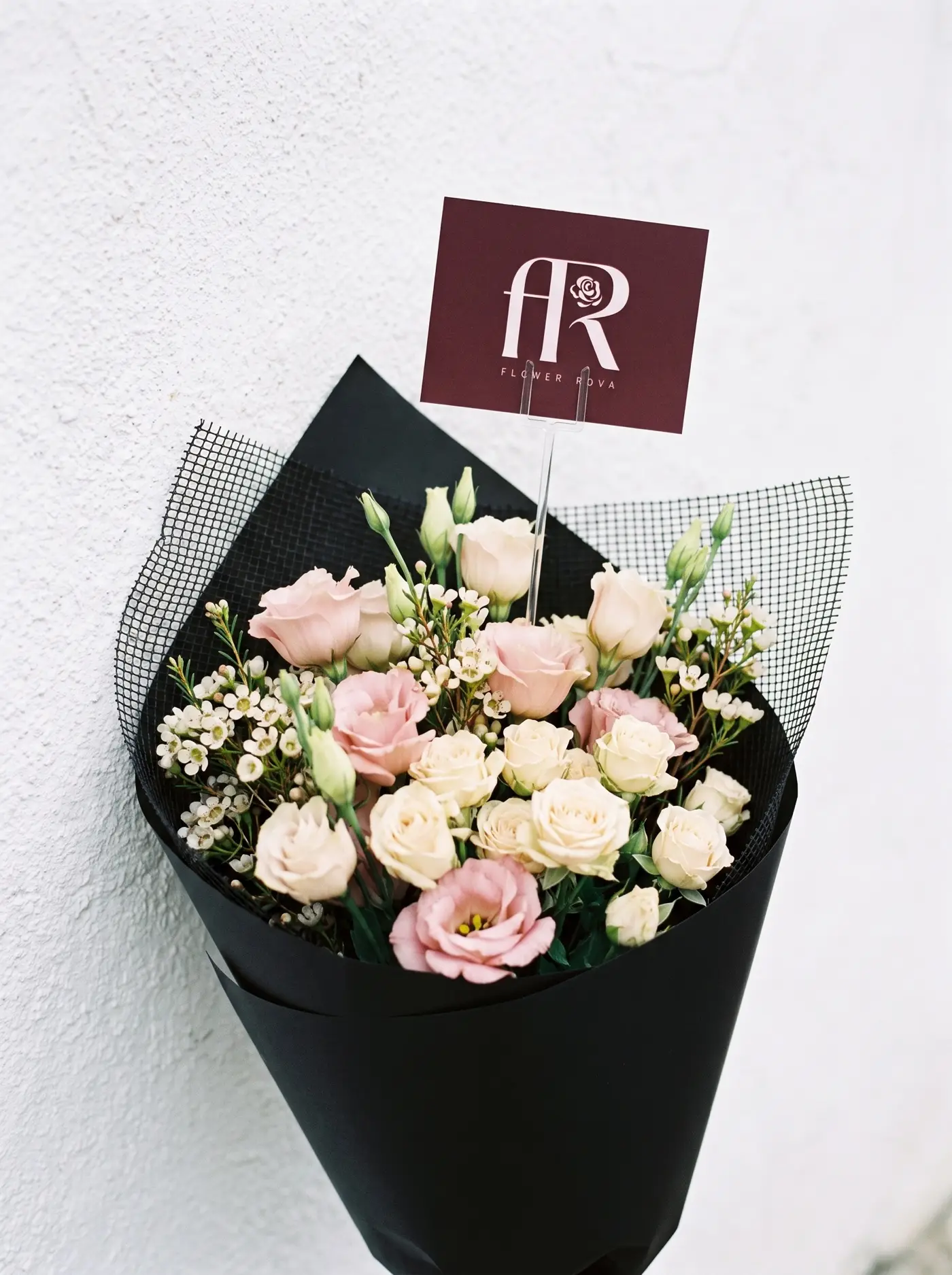
The question "do flowers make you happier" has a narrower answer than the internet suggests. Some studies found small, short-lived lifts in mood or relaxation, in specific settings, with small groups of people. That is a long way from "flowers improve your mental health", which is how the claim usually travels. Below, we go through what each study measured, how many people were in it, and what it means for a bouquet on your table in Bangkok.
It also covers the part the headlines skip. A flower can only do whatever it does while it still looks fresh, so the vase, the knife and the water matter as much as the stems.
Do flowers make you happier? The short answer and the caveats
The short answer is: a little, sometimes, for a short time, and nobody has shown it is more than that. The studies we can point to are mostly small, run in controlled rooms, and measure feelings or heart-rate readings within minutes of seeing flowers. Interesting, not a prescription.
Four caveats sit behind that sentence.
- Small samples. The experiments have between 30 and 160 participants. One of the best known used 31 office workers, all men.
- Short windows. Many measure the minutes after looking at flowers. None we can link follow people for weeks with a vase on the kitchen table.
- Pictures are not bouquets. Some experiments showed photographs, which tells you something about looking at flowers and nothing about owning them.
- Mixed sources. One of the most quoted summaries comes from a florists' trade association. That does not make it wrong, but you should know who is talking.
When a page tells you flowers "reduce stress", ask which flowers, which room, how many people and how long afterwards. The answers are usually smaller than the sentence. So when someone asks "do flowers make you happier", the honest reply is: fresh ones, in front of you, for a while.
What the studies measured, and what they did not
Here are the studies we can link to, side by side, kept to what each one reports.
| Study | Who and how many | What they did | What it can tell you | What it cannot tell you |
|---|---|---|---|---|
| Rutgers study, as summarised by the Society of American Florists | Participants in a study led by Jeannette Haviland-Jones | Received flowers | Reported smiles, feeling less depressed, anxious and agitated, and more contact with family and friends | The summary comes from a trade body; the effects are self-reported |
| Tokyo office workers and roses | 31 male office workers | Viewed 30 unscented pink roses for 4 minutes | Higher high-frequency heart rate variability than with no flowers, and feeling more comfortable, relaxed and natural | Anything about women, other ages, scented flowers or a vase left for a week |
| Rose colours, framed around COVID-19 isolation | 50 office employees, half women and half men | Viewed 25 unscented roses in yellow, red and white, 3 minutes per colour | Yellow and red raised parasympathetic activity and relaxation and comfort ratings above white; yellow also beat white on cheerfulness | Whether orange, pink or white-pink roses behave the same way |
| Camellia japonica picture experiment | 158 participants | Viewed pictures of flowers | Lower scores for nervousness, anger, fatigue, depression and panic on mood scales; colour mattered more than petal type | Real, physical flowers in a room |
| Systematic review of nature in offices | 12 quantitative records, 2012 to June 2023 | Reviewed workplace nature studies | Access to outdoor areas was effective for reducing worker stress | Indoor elements such as plants had more limited evidence |
The Rutgers work is often quoted, including in an NC State Extension article on Valentine's bouquets, which cites Haviland-Jones and colleagues' 2005 paper for the idea that flowers trigger happy emotions and heighten life satisfaction. That is reasonable with the source attached; it is not a law of nature.
Flowers in hospital rooms: the recovery studies
Hospital rooms are where the "flowers help you recover" claim usually comes from. We are not repeating recovery figures here, because we have not linked a study we can stand behind sentence by sentence, and a medical outcome is the last place to guess.
What we can document is the practical side, and it points the other way from the headline: hospitals set their own rules, and several say no.
- University Hospital Southampton asks visitors not to bring flowers or plants, citing hygiene and infection prevention, while allowing small items such as fruit and chocolate, and Hampshire Hospitals states that flowers are not permitted, to prevent infection.
- North Cheshire and Mersey NHS Foundation Trust gives the fullest list of reasons: flowers and their water can encourage bacteria and mould, a risk for immunocompromised or post-surgery patients, plus bedside space, cleaning, electrical safety and allergies.
These are UK trusts, and we are not telling you what any Bangkok ward allows. The narrower point is useful: even where flowers are loved, a ward may ban them, and one stated reason is the vase water itself. That is a clean-water argument from a hospital, not from a florist.
So ask first. Our guide to sending flowers to a Bangkok hospital walks through what to ask the nurses' station, and the get-well flowers page shows what we can arrange once you know the answer. If the ward says no, hold the gift until they are home; every gift on our site comes with flowers, so nothing turns up at a bedside that cannot take it.
Flowers at home and at work: mood, memory and small effects
The Tokyo experiment is the closest the sources get to an office desk: thirty-one men, four minutes, one vase of unscented pink roses, and a higher high-frequency heart rate variability reading than with no flowers. That is a real result. It is also one flower, one colour, one city and one sex, and it does not say that a vase of roses on your desk in Sathorn will lower anything by Friday.
Home
At home, the nearest evidence is indirect. Harvard Health's mood-boosters page says scientists believe time in a natural environment can calm prefrontal-cortex activity, that interacting with nature can lower blood pressure and cortisol, and that looking at pictures of nature can have a similar effect. A bunch of flowers is not a forest; treat it as a direction, not a measurement of your living room.
Gardening is a separate case. The Cleveland Clinic cites a meta-analysis finding a significant, positive effect of gardening on well-being, but that is watering and weeding, not receiving a bouquet.
Work
The office review is the cautious voice in the room: outdoor areas have evidence behind them, indoor plants much less. If you want one honest sentence about flowers at a desk, it is that nobody has shown they do much, and nobody has shown they do nothing.
Memory, in a literal sense
The Society of American Florists reports that 92 percent of women remember the last time they received flowers. That is trade-association survey data about recall of an event: it suggests being given flowers is memorable, not that flowers improve memory.
Why fresh matters: the clean vase and fresh water connection
Here is the part we will argue for as florists, with the caveat attached. The experiments above used fresh flowers. None, in the sources we can link, tested wilting flowers in cloudy water. So the claim that a tired bouquet will not deliver the same lift is inference, not a finding. It is a sensible inference, and it is the one you can act on.
What we do have is evidence about the vase itself: Cornell researchers tracked bacteria in vase water and found them growing more varied over a week, which is the gap between the fresh bouquet the mood studies measured and the one on your table by day six, and our guide to how to clean a flower vase covers that study and the routine.
In plain terms, the water is not neutral; after a week it is a different place from the one the stems arrived in. To keep the flower looking the way it did when it was measured, keep the water and vase clean.
A clean-vase routine that matches the guidance
Extension and horticultural sources, with our Bangkok adjustments in the last column.
| Step | What the guidance says | Bangkok note |
|---|---|---|
| Strip leaves | RHS advises stripping leaves below the waterline so they do not rot, and re-cutting stems with a sharp knife or secateurs | Do this before the stems go in, every time you change the water |
| Rest first | NC State Extension suggests conditioning flowers in a cool, dark place for 1 to 2 hours before arranging | An air-conditioned room is cooler than a balcony or a kitchen counter |
| Use floral food | The same NC State page says commercial floral preservative works better than home remedies, that too much bleach can kill plant cells, and that a penny in the vase no longer helps | Keep the sachet that comes with the bouquet; skip the kitchen cupboard experiments |
| Top up and change | Purdue's floral-design instructor advises topping up water daily and changing it with floral food every 2 to 3 days | Warm rooms and sunny windows are where we would change it more often, not less |
| Re-cut | Purdue advises re-cutting 1 to 2 inches and keeping flowers away from drafts | Set the vase away from the air-conditioner outlet as well as from the window |
What a week looks like
Purdue says roses stay fresh for roughly five to seven days. Here is a simple timeline built on that range.
- Day 0. Unwrap, strip the lower leaves, re-cut, rest in cool water for an hour or two, then arrange in a clean vase.
- Day 1. Top up the water. Check that no leaf sits below the waterline.
- Day 2 or 3. Change the water completely, add fresh floral food, re-cut again, rinse the vase.
- Day 5. Water change again. Pull any rose whose head has started to fold or darken.
- Day 6 or 7. Retire the arrangement, or keep two or three best stems in a small glass.
For how Bangkok's heat changes that schedule, our guide to making roses last in Bangkok heat goes deeper, and why flowers die in three days lists the usual causes.
Scent, colour and what seems to do the work
On which feature of a flower matters, the studies give a partial, slightly surprising answer: it may be the looking.
The Tokyo roses were unscented, and so were the roses in the colour experiment. The Camellia experiment used pictures, which carry no scent at all. All three still produced measurable differences in feelings or readings. So scent is not required for the effects those studies found. No source we can link tested scent as a cause, which is a fair reason to stop saying "the smell of roses lifts your mood".
Colour looks more promising. The Camellia study found colour had a bigger stress-recovery effect than petal type. In the rose-colour experiment, yellow and red beat white on relaxation and comfort, and yellow beat white on cheerfulness. That is a result worth knowing, with three limits attached: 50 people, three colours, three minutes per colour.
For Bangkok buyers, that is a light steer, not a rule.
- Red or yellow, if the studies are what you are following. Sunflowers are the obvious yellow, and red roses are one of our four colours.
- Orange was not tested by any study here. Our 10 orange roses are a warm choice, and we will not claim more than that.
- Pink was the colour in the Tokyo experiment, so 10 pink roses are the closest match to that setup.
- White did less well in one study. Pick it anyway if you like it; 50 people is not a verdict.
Scent has a downside that is documented. UTMB's note on fragrance sensitivity cites a University of West Georgia survey in which close to 30 percent of people found scented products on others irritating. That was about scented products generally, not bouquets, but it is a reason to ask before sending something strongly perfumed to a shared office.
Making it practical: a weekly bouquet versus one big one
No study in our pool compared the two, or tracked anyone as a bouquet wilted, so this is our judgement from how the findings line up. Put another way, "do flowers make you happier" becomes "do fresh flowers in view most days make you happier", and that is the version we would back.
The experiments measured short exposures to fresh flowers. A small bouquet changed every week keeps fresh flowers in view for most of the week, whereas one large bouquet is at its best for several days and then declines. The Society of American Florists' gift tips also report that most people name "just because" as the best reason to receive flowers and that unexpected gifts have the biggest impact. Trade-body survey data, but it points the same way.
| Option | What it gives you | What to watch |
|---|---|---|
| Small and weekly: 5 pink roses (฿1,999 as a one-off) on a subscription | Fresh flowers most days; a regular water-change habit | Fatigue if you stop caring for them; check the subscription page for terms |
| Medium and fortnightly: 10 roses (฿2,399 as a one-off) | More to look at on the day, a quieter schedule | Days at the end of each cycle when the bouquet is past its best |
| One large bouquet: 30 roses (฿3,999) for an event | A real moment for a birthday or a visit | Expect five to seven days of looking good, then a decline, per the Purdue range |
| Mystery Box | The florist chooses, you stay curious | Say so in advance if there are allergies, pets or a colour you dislike |
For surprise and variety, the Mystery Box lets the florist choose. Browse flowers by type if you would rather pick, or the build-your-own tool for control of the mix.
Worked example: a Thonglor flat, working from home
Say Nok works from a one-bedroom flat in Thonglor and spends most days at the same table. She asks us for something small that she will actually look after. A weekly 5 pink roses delivery on a Monday gives her fresh stems for the working week and a clear day to change the water; our guide to a rose subscription at home in Bangkok covers how the weekly cycle runs. She keeps the vase beside, not under, the air-conditioner.
The card: "For the desk. Change the water on Wednesday." Delivery timing and what we can promise are on the delivery page.
Worked example: a team desk in a Sathorn office tower
Say a small team on the 18th floor of a Sathorn tower wants flowers on the shared table. They choose 10 orange roses at ฿2,399 and ask reception to accept the delivery. If they are ordering the same day, they order before the 9 pm cut-off for bouquets up to 40 roses; a request for a bigger arrangement needs the notice listed on the delivery page.
One person owns the vase and the water, because a job that belongs to everyone belongs to no one. A card is optional on a team order; if you add one, keep it to a line: "For the 18th floor. Whoever changes the water on Wednesday picks the next colour." The aim is a pleasant shared object, not a stress programme.
Worked example: a friend recovering at home
Say Mali has just come out of hospital after surgery and is resting at home in Ari. The first question is whether she wants visitors and flowers, so you ask. If she says yes, 20 white-pink roses with a spa set is a gentle gift that comes with flowers, and a card that gives her permission to ignore it: "No reply needed. Rest." If she says no, you wait.
When flowers are the wrong gift
Flowers are the wrong move when the recipient has told you they do not want them, when a hospital ward forbids them, when the person has hay fever or a fragrance sensitivity and has not agreed, and when a cat lives in the home. The ASPCA states that lilies of the Lilium type can cause severe kidney injury in cats, including from drinking vase water or grooming off pollen, so we never suggest them for a home with a cat. Our rose pages are a safer starting point, and the ASPCA lists rose as non-toxic to cats.
What flowers are not: no medical claims
Do flowers make you happier the way a treatment would? Nobody has tested that, and a bouquet is not a treatment. It is not a substitute for sleep, therapy, exercise, medicine or company. We are not doctors, and nothing in this article says flowers reduce anxiety, help depression, aid recovery or improve sleep. Where we describe a study, we describe what it measured in the people it measured. If you are struggling with low mood or anxiety, talk to a doctor or a counsellor.
They do not clean your air
You will see "flowers purify the air" too. The claim traces to a 1989 NASA technical memorandum on indoor plants and pollutants, a controlled-chamber study whose abstract does not claim ordinary houseplants clean room air. The American Lung Association explains that the chamber results do not translate to real homes and quotes a 1992 EPA memo saying matching the chamber's removal rate would take 680 plants in a typical house.
For Bangkok, a study of 17 Thai houses sampled in 2019 found mean indoor PM2.5 in Bangkok of 19.85 µg/m³ in haze periods against 11.40 in non-haze periods. Indoor air tracked the outdoors, so ventilation and filtration are the tools, not flowers; the EPA's indoor air introduction says inadequate ventilation raises pollutant levels.
They can irritate
The NHS lists not keeping fresh flowers in the house among self-care advice on hay fever. If someone you are sending to has hay fever or asthma, ask them. A pet or allergy note when you order is a kindness to everyone, and our contact page is the place to say it.
Frequently asked questions
Do flowers make you happier at work?
The evidence is limited. A Tokyo experiment found changes in heart rate variability and feelings after four minutes of looking at roses, and an office-nature review found stronger evidence for outdoor areas than for indoor plants. A pleasant, well-kept vase can make a desk nicer, but no study here shows it lowers workplace stress.
How long do the good feelings from flowers last?
The studies we can link measured minutes or short sessions, not weeks, so no one can give you a number. The flowers themselves last roughly five to seven days for roses, per Purdue. If you want the look to last, change the water every two to three days and re-cut the stems.
Is it better to buy flowers for yourself or to receive them?
The Rutgers work, as summarised by the Society of American Florists, looked at people who received flowers. We have not linked a study that compares buying for yourself with being given them. If you want flowers around, you do not need an occasion; many people name "just because" as the best reason.
Can flowers help with anxiety or depression?
We cannot say that. The picture experiment measured mood scales in 158 people after viewing flowers, which is not a treatment trial, and flowers are not a medical treatment. If you are struggling, talk to a doctor or counsellor. Flowers are a pleasant extra, not a plan.
Do artificial or preserved flowers have the same effect?
We cannot say, and neither can the studies we link: the experiments in this article used fresh flowers, and none compared them with artificial or preserved ones. A preserved box or a dried bunch still brings colour into a room and needs no water, which suits some homes. If the mood effect is the reason you are buying, fresh flowers are the only kind with evidence behind them, small as it is.
Should I send flowers to someone in hospital?
Ask the ward first. Hospital rules differ, and several UK trusts ask visitors not to bring flowers because of infection control. Our hospital guide lists what to ask, and if the answer is no, hold the gift until they are home. To discuss an order, message us on LINE or WhatsApp.