

Sympathy Flower Messages: What to Write on Condolence Flowers
Sympathy flower messages for a friend, colleague, client or Thai family: a four-part formula, Thai ribbon wording and 30 lines to adapt tonight.
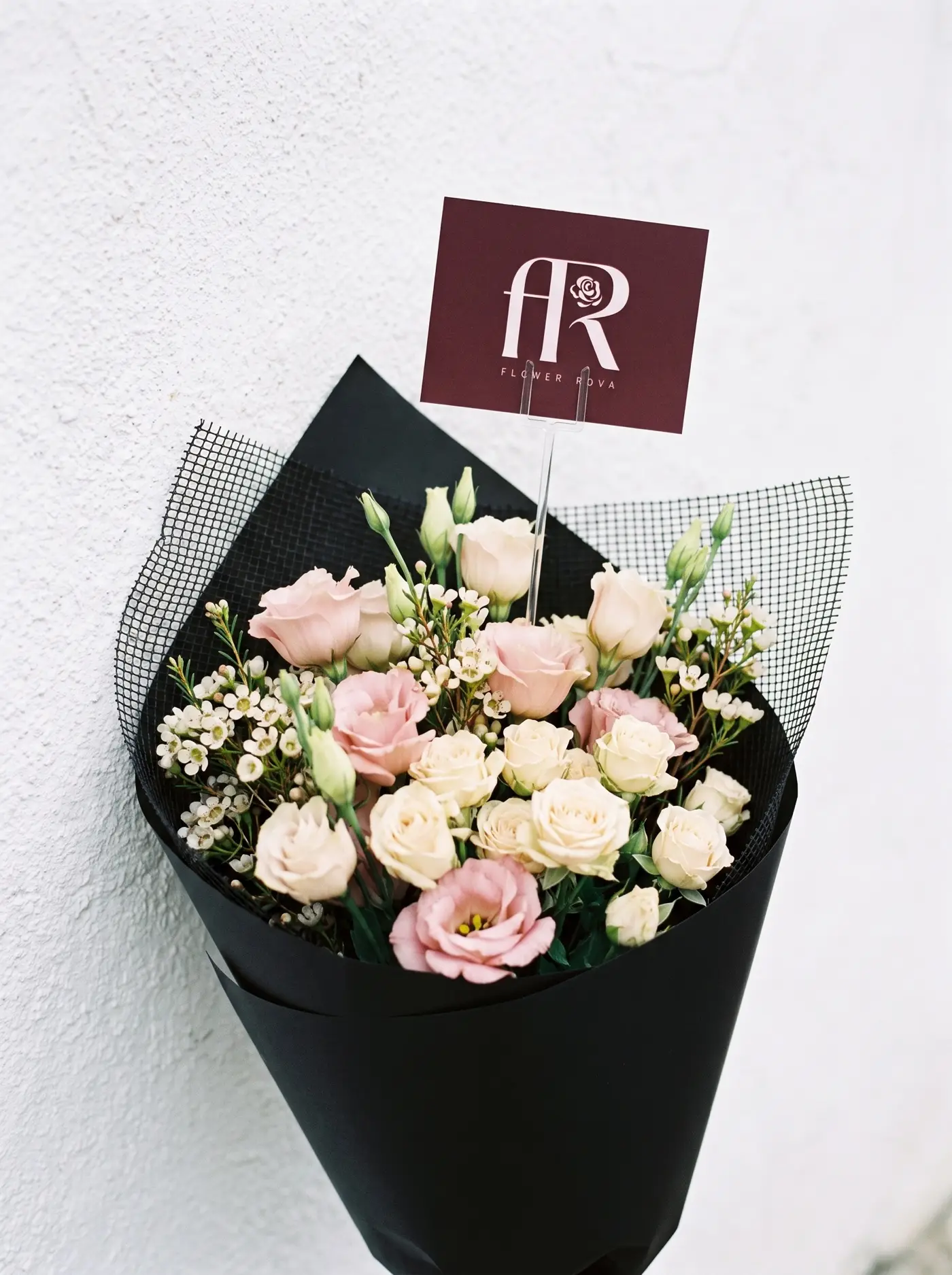
You have heard the news, the flowers are the easy part, and the card is what stops you. This guide gives you sympathy flower messages you can adapt in five minutes: a four-part formula, separate lines for a friend, a colleague, a client and a neighbour, the wording for a Thai funeral wreath ribbon, and a bank of 30 lines at the end. If you searched for what to write on a sympathy flowers card, go straight to the bank and come back for the reasoning.
Most of it applies anywhere, and the sympathy flower messages below are written to be changed, not copied. The Bangkok parts cover what Western message lists skip: a ribbon in Thai and English, a company name that has to be exactly right, a temple that may not accept flowers, and the merit-making days that come after the funeral.
Sympathy flower messages: short, true and addressed to the living
A condolence card has one job. It tells a grieving person that someone noticed; it does not explain death or repair anything.
AARP's guidance on writing a condolence message says three or four lines are enough and that a store-bought card is fine with a short personal note added. The family will read it standing up, among dozens of others, so it must be quick and unmistakably personal.
Marie Curie reports that grieving people often tell the charity the worst thing someone can say is nothing. So the first rule is to send something. The second is to write to the person who is alive and reading.
The four parts of a condolence line: name, loss, memory, offer
Sue Ryder recommends acknowledging the loss simply, sharing a memory of the person and suggesting specific help such as cooking a meal. A Psychology Today piece by a grief psychologist adds the person's name and an offer with a day and time. Together that makes four parts.
1. Name: the person who died, and the person reading
Harvard Health says not to be afraid to mention the deceased by name. Use the name the family used: "your father", "Aunty Lek", "Khun Somchai", not a formal name copied from a notice. Address the card to the reader too, so it reads as a note to one person.
2. Loss: say what happened, plainly
"I was so sorry to hear that your mother died." Not "lost her battle" or "is no longer with us" unless the family uses those words. Plain words show you are not flinching. Do not ask about the cause.
3. Memory: one specific thing
A memory can be tiny: the corner seat he always saved in the meeting room, the mango sticky rice she brought to the office every Songkran. Harvard Health also notes that saying how much you will miss the person lands better than a perfunctory "I'm sorry for your loss". With no memory, use a quality: "Everyone in the department knew she would answer at midnight if someone was stuck."
4. Offer: concrete, with a day attached
"Let me know if you need anything" hands the bereaved a job. Harvard's advice is to be specific rather than ask if you can "do anything"; the Psychology Today piece adds a day and time. "I will bring dinner on Thursday and leave it with your building's juristic office" can be accepted or declined in one word.
A client you have met twice gets name, loss and a short wish; a close friend gets all four. If anyone could have sent your card to anyone, add the memory.
Messages for a friend, a colleague, a client and a neighbour
The formula stays fixed. What changes is how much you claim to know and how much you promise. The bank at the end has full wording; this table is the shape. The length column is a ceiling: short sympathy card messages are the norm, not a failure of effort.
| Relationship | Length | Memory | Offer | Avoid |
|---|---|---|---|---|
| Close friend | 3–4 lines | A shared scene | A specific act with a day | "He's in a better place" |
| Colleague | 2–3 lines | A work moment or quality | Cover tasks, bring a meal | Asking about the cause |
| Client | 2 lines | Usually none | A pause on deadlines, if true | Sales language, logos |
| Neighbour | 2–3 lines | A small daily detail | Errands, the front desk | Intruding on arrangements |
A sympathy message for a coworker should match the workplace you share: name the person, say you are sorry, offer something that fits an office such as taking a meeting or collecting lunches, and never hint at returning soon. If the team sends one bouquet, each person adds a line in their own hand rather than one person signing for all.
For a client, keep the words of condolence short, human and unbranded: "We were very sorry to hear of the death of your father. Please take whatever time you need; we will hold the schedule." Write the last sentence only if your company will honour it. Our business gifting guidance covers approvals and sender names, and the corporate page handles company orders.
A neighbour in a condo knows the family by sight and the front desk. Write from your unit number in two lines, and hand it over yourself or leave it with the juristic office.
When you did not know the person who died
This is the hardest brief: a colleague's husband, a client's mother. The danger is pretending a closeness you do not have.
Be honest about distance. "I never met your mother, but I have heard you speak of her many times, and I am so sorry." If the bereaved once told you something about the person, use it: "You told me she taught you to cook rice by listening to the pot."
Leave out claims about the dead person's character that you cannot know and general principles ("everything happens for a reason"). Three lines at most. If you write for a company, make the organisation the sender and say so.
Writing for a Thai funeral: wreath ribbons, company names and Buddhist phrasing
Thai funeral customs differ by family, region and religion, so read the notice. A condolence flowers message in Thailand takes two forms: the ribbon on a wreath at the temple, and the card on a bouquet that goes to the home later. Our guide to phuang reed funeral flowers covers the wreath itself; this section covers the words.
What a ribbon carries
A funeral flower card message in Thailand is usually a ribbon, not a card. The Thailand Foundation says the wreath should show the giver's name and a short tribute, and that some temples may not accept wreaths, so confirm first. An interview study of Thai funeral wreaths, with 20 informants, concluded that wreaths now signal the giver's identity and status. That is why the name must be exact: other mourners read the ribbons.
The foundation gives no scripted phrases; the lines below are common practice, not an official text, so have a Thai speaker or the family contact check them before production.
- ขอแสดงความเสียใจอย่างสุดซึ้ง (kho sadaeng khwam siajai yang sutsueng): "deepest condolences". The safest line for any sender.
- ด้วยความอาลัยยิ่ง (duay khwam alai ying): "with deep sorrow". Common on company wreaths.
- ขอเป็นกำลังใจ (kho pen kamlang chai): "sending strength". Warm, with no religious content.
Company and department names
Use the full registered company name as on the letterhead, in Thai script if a Thai name exists, with English below. For a department, the department comes first, then the company, then "and colleagues" if the team contributed. The wreath guide covers titles, logos and proofs; the point here is that a misspelt or abbreviated name is what the family will remember.
Say you are a foreign manager in Sathorn and a Thai colleague's mother has died. You ask the team lead for the temple, the day and whether a wreath is welcome. The ribbon carries the company name in Thai and English and one line from the list above. A week later a small bouquet goes to the colleague's home with your own four-part line. The wreath is the company's; the bouquet is yours.
Buddhist phrasing from someone who is not Buddhist
You can be respectful without claiming belief. BuddhaNet's overview of Thai-style funerals describes monks chanting and food offered to them as merit-making, with memorial services on the seventh, fiftieth and hundredth days. You need not wish anyone a good rebirth in your own voice; the ribbon can simply say you are sorry.
A traditional line is ขอให้ไปสู่สุคติ (kho hai pai su sukhati), "may they go to a good destination". Use it when the family is Buddhist and a Thai colleague suggests it. In your own card, stay with what you can honestly say.
If you attend, the Thailand Foundation's guide says Thais wear white and black, and that the politeness of the outfit matters more than the colour. Thai PBS World's advice to foreigners during Thailand's mourning period, modest dress and no bright colours, holds at a funeral too, and it adds that "I'm sorry for your loss" is enough to say to Thai colleagues. The Thai wai has three levels depending on whom you greet; to the bereaved, a small, quiet one is enough, and our flower giving etiquette guide covers the wai with flowers in your hands.
What not to write: platitudes, borrowed religion and "let me know"
Most bad sympathy flower messages fail in the same few ways. Hospice UK warns that "they're in a better place" and "at least they lived a long life" can feel dismissive. An NHS trust's guidance names "I understand how you feel", "You'll get over it" and "Time heals" as clichés that do not help the bereaved. Leave out:
- Anything about a better place. You do not know, and the family may not agree. Helpguide's list of platitudes is a quick check on a draft.
- Religion the family may not share. A Christian blessing for a Buddhist family, or a karmic remark to a Catholic one, reads as presumption. Write in your own voice.
- "I know how you feel." You do not, even if you lost a parent too. "I remember how quiet the house was after my father died" leaves room for them.
- "Let me know if you need anything." Replace it with a task, a day and an easy way to say no.
- Jokes and cheer. A joke about the person belongs in a eulogy, said by someone who was asked.
Which flowers go with which message: white-pink roses, orchids and the wreath
Sympathy flower messages matter more than the flowers, but the two should match: a quiet message with a quiet arrangement, a formal company message with the wreath.
White-pink roses. The white-pink rose colour page is the simplest sympathy order, because nobody reads it as celebratory. Twenty white-pink roses are ฿3,299 and suit a friend or close colleague. For a client or neighbour a smaller size from the rose range is enough.
White Signature designs. The White Room is the design we build unscented and low-pollen by default, a sensible choice for a small home. The Quiet Cream, cream roses in gypsophila, is described on its page as the least loud bouquet we make. The Ceremony is the large white and cream design for a company or senior client.
Orchids. A plant or arrangement from the orchids range usually outlasts cut roses, which suits a family receiving visitors for days, or an office. Our orchid care guide for Bangkok condos helps the recipient keep it alive.
The wreath. It stays at the temple and is a different object from a bouquet. Ask us about one by chat on LINE or WhatsApp with the temple name and the date, rather than ordering a bouquet and hoping.
One flower to skip: Thailand Now reports that Thais place tuberose near the coffin at funerals and never give it to the sick; which other flowers carry a funeral reading, and where, is in our flower meanings guide.
Timing: the first days, the merit-making and the hundred-day anniversary
Flowers have three moments.
| When | What to send | What the card says |
|---|---|---|
| Days 1–3: the rites | A wreath to the temple, only if wanted | Name and a short tribute |
| Weeks 1–2: the family is home | A bouquet or orchid to the home | The full four-part line |
| Days 7, 50 and 100 | A small bouquet, or a message alone | A remembered date; no offer needed |
The Thailand Foundation says to send the wreath at the host's preferred time or, failing that, early evening on the first day, and that the anniversary merit-making is held at 7, 50 and 100 days with 5, 7 or 9 monks. Ask which the family holds.
The hundredth day is the one most senders miss, because by then the cards have stopped. "It is a hundred days today. I am thinking of your father and of you. I will come by on Saturday with lunch if that is easy." A visit matters as much as the first message.
A friend abroad cannot attend, so the flowers are the visit. Put your city on the card and phone a few days later.
Delivery to a temple, a home or an office in Bangkok
A temple. Thailand Now says wreaths are cremated with the body, so they go to the temple, not the home, unless the funeral is held there. A large Bangkok temple such as Wat That Thong by Ekkamai BTS can run several funerals at once in numbered salas, so the sala number and a contact who can receive the delivery matter more than the temple name.
A home. A bouquet goes to the home after the first rites. Ask the family contact for the address; never take it from social media or a third colleague. In a condo, the juristic office often holds deliveries, and a bouquet left with them is kinder than a knock during a visit from monks.
An office. Use it for a colleague back at work, or a client who asked. Send to the front desk with name, department and floor, and warn the recipient. If the death is recent, check first; some people prefer no condolences in front of colleagues.
Cut-offs. Same-day delivery covers bouquets up to 40 roses ordered by 9 pm and 50 roses by 7 pm; larger sizes need notice, as the delivery page sets out. We promise no clock time, so for a ceremony at a fixed hour order the day before. If the family is still at a hospital, read what wards allow first.
The sympathy flowers page shows what we send for these occasions, and our guide to what to write on a flower card covers card mechanics for every other occasion. The greeting cards range lists gifts with a card; for sympathy a short plain line beats a pop-up.
A message bank: 30 lines to adapt
Thirty sympathy flower messages, grouped by relationship. Change the names, delete what is not true and keep it to three or four lines.
A close friend
- "Ploy, I am so sorry about your dad. I keep picturing him shouting the score at badminton. I will bring dinner on Thursday."
- "I heard this morning and I am with you in my head. Tell me which evening is quietest and I will come."
- "Your mum made me feel I lived at your house. I will miss her. I will call on Sunday; no need to answer."
- "Nothing I write will be enough. I love you and I am coming on Saturday with lunch."
- "I am sorry that your grandfather has died. He always asked about my work as if it mattered."
- "I am far away and I hate it. These flowers are me at your door. Call any hour."
A colleague
- "Nok, I am so sorry about your mother. Please don't think about the quarter-end report. I will cover it."
- "From all of us in Accounts: we are very sorry about your father. Your desk stays exactly as it is."
- "I am sorry for your loss. You are always first to help anyone in the team, so let us help you. Tell us how."
- "Khun Anan, I was so sorry to hear about your husband. Take all the time you need."
- "We are thinking of you and your family this week. Your project is safe with us."
A client
- "Dear Khun Pim, we were very sorry to learn of the death of your father. Please accept our sincere condolences."
- "With deepest sympathy on the death of your mother. We will hold all deadlines until you tell us otherwise."
- "Please accept our condolences. Everyone at [company] is thinking of you and your family."
- "We are sorry to hear of the death of Khun Somchai, whose kindness we remember from our first meeting."
A neighbour
- "We live in 1204, two floors below. We are so sorry about your husband. If you need shopping, knock any time."
- "We are sorry for your loss. He always held the lift for our children."
- "From the family in 802: we are sorry about your mother. We will keep the corridor quiet this week."
You did not know the person who died
- "I never met your father, but you spoke of him often and I am so sorry. Talk or don't; I am here."
- "I did not know your mother, but I know her influence on you. My sympathies to you and your family."
- "I am sorry for the loss of someone so clearly loved. I am thinking of you."
- "On behalf of everyone at the firm, we send our deepest condolences on the death of your father."
Thai funeral ribbons and cards
- ขอแสดงความเสียใจอย่างสุดซึ้ง, "Deepest condolences", then [full company name]
- ด้วยความอาลัยยิ่ง, "With deep sorrow", then [department], [company] and colleagues
- ขอเป็นกำลังใจ, "Sending strength", then [your name]
- "With respect and sympathy to the family of Khun [name], from [company], Bangkok."
Later: day 7, day 50, day 100
- "It has been seven days. I hope the house is not too quiet. I will call on Sunday."
- "Thinking of you at the 50-day merit-making. If you want company afterwards, I am free."
- "It is a hundred days today. I am thinking of your father and of you."
- "No reply needed. I remembered the date and wanted you to know."
Frequently asked questions
What do you write on a sympathy flower card?
The best sympathy flower messages run three or four lines: the person's name, a plain statement that you are sorry they died, one memory or quality, and one concrete offer. "I am so sorry that Khun Somchai has died. I remember how he saved me a seat at every meeting. I will bring dinner on Thursday." Short and true beats long and borrowed.
What is a good short sympathy message for a coworker?
Keep it to two or three lines in words you would say aloud: "Nok, I am so sorry about your mother. Please don't worry about the report; I will cover it this week." Name the person who died, say you are sorry and offer something specific at work.
What should I write on a Thai funeral wreath ribbon?
Write your full name or the full registered company name and a short line such as ขอแสดงความเสียใจอย่างสุดซึ้ง, "deepest condolences". The Thailand Foundation says the wreath carries the giver's name and a brief tribute but gives no scripted text, so ask a Thai speaker or the family contact to check the Thai before it is printed.
Can a non-Buddhist use Buddhist phrases on a condolence card?
Yes, with care. A line such as ขอให้ไปสู่สุคติ, "may they go to a good destination", is usual among Thai Buddhist families, and a Thai colleague can tell you if it fits. If you are not comfortable saying it, "I am sorry, and I am thinking of you and your family" is respectful and needs no belief.
Is it too late to send flowers after the funeral?
No. Weeks later the cards have stopped, so a bouquet is noticed more. The 7, 50 and 100-day merit-making days are natural moments, and the hundredth is the one most people forget. Send a short note and say no reply is needed. To discuss wording or a wreath, message us on LINE or WhatsApp.