

Choosing a Corporate Flower Supplier in Bangkok: The Four Options Compared
Contract florists, platforms, facilities suppliers and studios. What each is priced to do, where contracts go wrong, and what to put in writing.
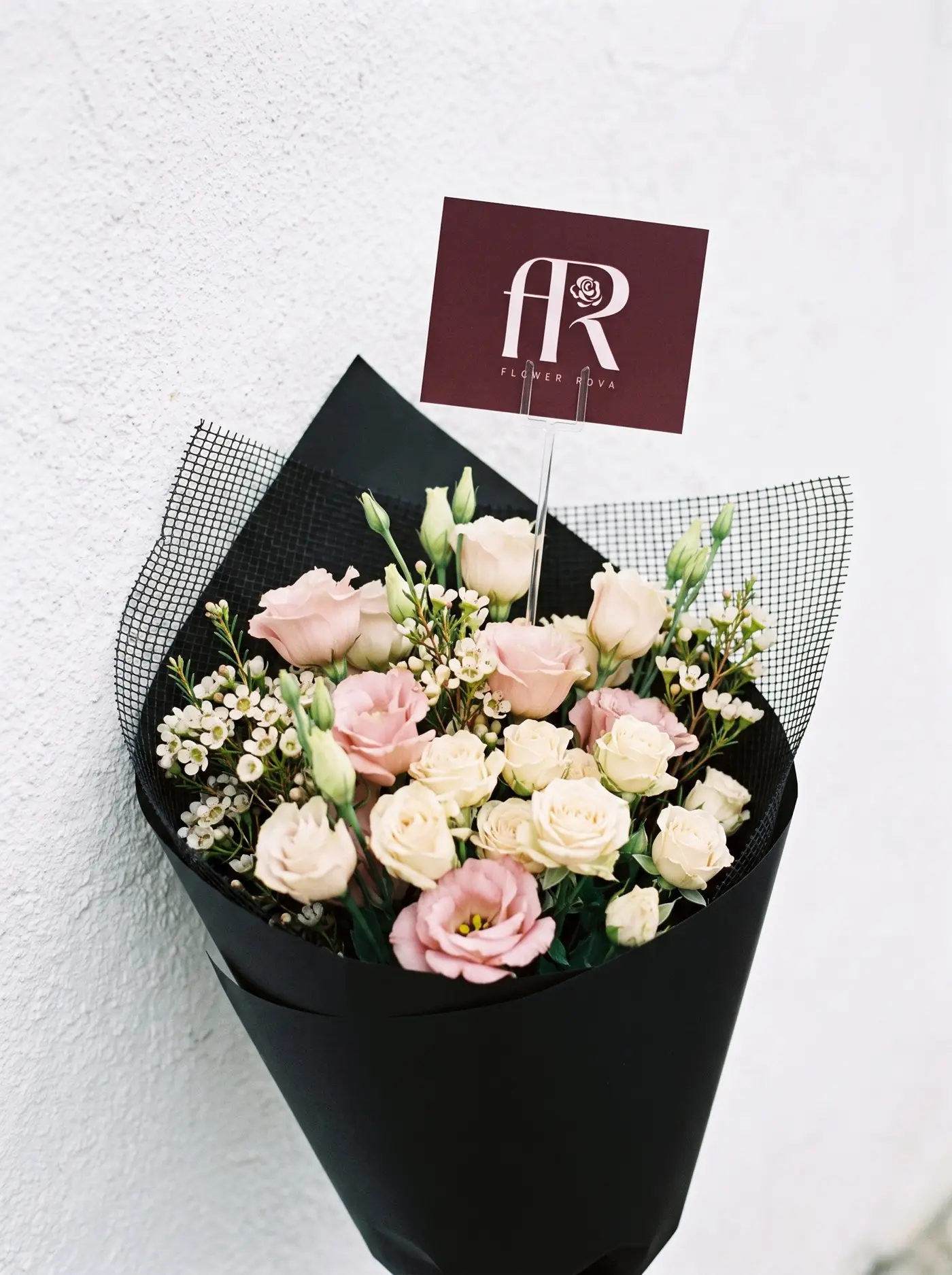
Corporate flower buying is a different purchase from personal gifting. A reception arrangement belongs to an ongoing service: somebody chooses its position, receives the delivery, changes the water and decides when it should be refreshed. Comparing suppliers starts with those responsibilities, rather than assuming that a familiar type of business will automatically handle them.
Four supplier types can compete for the same budget. The categories below describe possible purchasing arrangements, not surveyed rankings of Bangkok companies. A particular supplier may combine several models, so use the questions to evaluate its actual proposal and evidence.
The four options
1. The contract florist
A contract florist focuses on recurring commercial work such as offices, hotels or restaurants. Ask which parts of the proposed service its own staff handle and which, if any, are provided by partners. Vehicles, crew size and early access should be checked for the actual property.
Priced for: reliability at volume. Fixed monthly retainer, defined scope, on-site refresh.
Potential advantage: a recurring scope can make responsibilities easier to plan. Ask for the proposed delivery days, named contact, transport arrangements and escalation process. A retainer does not establish punctuality or refrigeration; those details need to appear in the offer and be demonstrated during a trial.
Design question: does the proposed recurring scheme suit the space? Ask to see examples of comparable work and identify how colours, scale and flower choices would change. A repeatable design may be exactly right for reception, but the contract label alone says nothing about creative ambition.
Consider for: properties with recurring placements and access requirements. Assess the proposed team against the scope instead of choosing solely by hotel size or supplier category.
2. The delivery platform, on a recurring order
A standing order through a marketplace.
Priced for: transactional convenience.
Potential advantage: an online ordering account may make repeat purchases easier to administer. Check payment methods, billing documentation, covered addresses and who receives an enquiry after delivery. Do not assume that every marketplace offers the same account tools or commercial paperwork.
Questions to resolve: who fulfils each delivery, whether you can request continuity, and how the proposed day fits building access. If reception must be ready before a meeting, say so in the brief and obtain an explicit response. A date selection is not necessarily a guaranteed arrival time, and a platform account is not evidence of inconsistent flowers.
Best for: multi-site companies with modest requirements and a procurement process that will not accommodate a small supplier.
3. The facilities or office-services supplier
The company that already provides your plants, water coolers, coffee or cleaning, adding flowers as a line.
Priced for: consolidation. One invoice, one contact, one contract.
Strong at: procurement simplicity. This is a genuine and underrated benefit — for a facilities manager with forty suppliers, removing one is worth real money.
Questions to resolve: who designs and supplies the flowers, who handles a problem, and what the quoted total includes. A facilities supplier may use its own team or a partner. Ask for an itemised explanation; do not infer subcontracting, a hidden margin or lower quality from the billing relationship.
Consider for: organisations that value consolidated administration, provided the floral specification and support arrangements are clear. Compare the complete service with a separate floral contract before deciding whether consolidation offers value.
4. The studio
A small florist taking a limited number of commercial accounts alongside retail work.
Priced for: the arrangement itself.
Potential advantage: direct discussion of composition, palette and the recipient space. Ask who will interpret the brief and whether that person remains your contact. FlowerRova sources from private Thai farms and imports; this does not establish named farm allocations or a particular harvest schedule.
Capacity question: what can the proposed team actually support? A property with multiple outlets needs a clear staffing, delivery and absence plan. A studio might organise this successfully, while a larger business might propose an unsuitable service. Test the plan rather than assigning a capacity ceiling to the category.
Best for: single-site offices, boutique hotels, restaurants, showrooms — where the arrangement is seen closely and scale is modest.
What a contract should actually specify
A useful brief describes both price and scope. These are practical items to discuss with the supplier, rather than a legal template or a statement of terms already offered by FlowerRova:
Outlets and placements, named. "Reception, two client meeting rooms, pantry" — not "the office".
Refresh frequency, by day. "Twice weekly, Monday and Thursday." And define refresh: full replacement, or removing failed stems from an existing arrangement? Those are very different costs and the ambiguity is where suppliers quietly economise.
Delivery day and preferred timing. State when the space is used and any building access limits. For FlowerRova, delivery is on the customer’s requested day, including same-day orders by 9 pm across all rose quantities. That is not a guaranteed early-morning or exact clock-time appointment; discuss event-specific requirements in chat.
Access. Who lets the florist in, which lift, which loading bay. Sort this once with building management rather than renegotiating weekly.
Seasonal substitution, explicitly. Ask which flowers are essential and which can vary while retaining the intended palette and scale. Record how a proposed change will be discussed and who approves it. Availability should be checked for the order; a season name does not prove that a supplier will substitute, or that one origin will always perform better.
Vessels. Included, hired, or purchased? Two hundred vases is a very different number from hiring them.
Removal. Who takes last week's arrangement away. You do not want to be disposing of it.
Events, separately described. If event work is included in a recurring proposal, identify the event quantities, setup responsibilities and additional charges explicitly. Separating the lines makes later comparison easier without assuming that every combined contract is unsuitable.
A named contact on both sides. Record who can report a problem, who can approve a change and how the supplier should respond. A direct contact helps keep the conversation together, without implying a guaranteed resolution time.
Where corporate contracts go wrong
Undefined refresh. A proposal that says only “weekly flowers” leaves important questions open. Name the delivery day and ask whether each visit brings a complete new arrangement, a partial refresh or another service. That distinction lets the person receiving the flowers check what was agreed.
Air conditioning. Consider placement away from direct airflow, heat and sunlight, and identify who will change the water. If flowers decline, document their condition and contact the supplier. Avoid assigning a precise loss of vase life or deciding the cause from the position alone.
No substitution process. An essential colour or flower should be identified before ordering. Ask how an unavailable item would be discussed, and do not treat a general statement about seasonal flowers as permission for every possible change.
Buying on price per arrangement. A retail bouquet and a managed reception service may include different work. Compare flowers, vessels, transport, placement, collection and maintenance separately. A higher contract price needs an explanation in the proposal; it does not automatically buy holiday coverage or a punctuality guarantee.
Bundled event work. As above.
An unsuitable operating plan. Match the proposed people, delivery arrangements and contact process to the property. Neither a studio nor a large facilities business should be rejected solely because of its category; a scoped trial is more informative than an assumed size limit.
What to ask a prospective supplier
- What delivery day and access arrangement are proposed? Describe the opening time and ask what the supplier can confirm.
- What can you tell us about the flowers? Ask for substantiated sourcing information and availability, without treating an unverified cut date as proof of longevity.
- How are substitutions discussed? Identify essential colours, approval contacts and acceptable alternatives.
- How do we plan holiday deliveries? Discuss the actual requested date rather than assuming a citywide closure.
- Can we see relevant completed work with permission? Distinguish client photographs from styled shoots and generated illustrations.
- Who is our named contact, and what is their phone number?
Where to put the budget
If the budget is constrained, concentrate rather than spread.
Reception is non-negotiable. It is the first thing a client sees and the cheapest possible signal that a company is functioning well. One substantial, obviously well-made arrangement here does more than a dozen small vases across the floor.
Client-facing meeting rooms, second. Only the rooms clients actually enter.
Communal areas, third. Popular with staff, low cost, can be simpler.
Executive desks, last, and optional. In some cultures this reads as care; in others as hierarchy. You know which yours is.
Two things help a flower line survive a cost review: put it on reception and make it good, and describe it as "reception and client meeting rooms" rather than "office flowers". That is not a trick — it is an accurate description of where the value is.
A comparison
| Question to compare | Contract florist | Platform | Facilities supplier | Studio |
|---|---|---|---|---|
| Who fulfils the order? | Request team details | Identify the fulfilling seller | Identify own team or partner | Identify responsible team |
| What timing is agreed? | Check proposal | Check order terms | Check service scope | Confirm in chat |
| How is design reviewed? | Review examples | Review selected listing | Review floral specification | Discuss palette and examples |
| What does billing include? | Itemised quote | Order total and fees | Separate floral line | Itemised quote |
| How are problems handled? | Named contact | Platform and seller process | Account contact | Studio contact |
Where we sit
FlowerRova can discuss office and hospitality flowers through our corporate enquiry page. Share the placements, dimensions, requested delivery days and any access restrictions so the team can discuss a suitable scope. Do not assume that maintenance visits, pre-opening setup, dedicated staffing or particular billing documents are included unless they are confirmed for the order.
For a complex property, bring a detailed brief. Name each reception, restaurant or meeting space and explain how it is used. The useful question is whether the proposed service meets that brief. We do not publish an unsupported room-count ceiling or claim a fleet, staffing level or existing client portfolio as evidence.
For a single-site space, start with the placement. A photograph of the reception desk, a measurement of the usable surface and an explanation of sightlines can be more helpful than a generic request for luxury flowers. Ask the team to discuss the design and quote before treating a catalogue bouquet as a managed service.
Talk to us about a property and we will quote against a defined scope rather than a round number.
Frequently asked questions
How much do office flowers cost in Bangkok? There is no verified market price range in this comparison. Request quotes against the same placements and number of deliveries. As a retail reference only, FlowerRova’s 100-rose bouquet is ฿6,649; it is one hand-tied bouquet, not a recurring office-service price or an installation quote.
Weekly or fortnightly for an office? Choose the interval around the space and the care someone can provide. Weekly and fortnightly plans should specify what is delivered at each visit; a fortnightly schedule does not establish a fourteen-day vase-life guarantee. Compare a short trial before committing to a longer routine.
What is the most common corporate flower mistake? An unclear scope is an avoidable problem: specify what each delivery includes, who receives it and who cares for the arrangement. This is a planning recommendation, not a measured ranking of complaints.
Should flowers come through our facilities supplier? Compare its floral specification and total with a direct proposal. Consolidation may be convenient, but ask who fulfils the order and handles problems rather than assuming that a subcontracting margin or quality difference exists.
Do we need refrigerated delivery in Bangkok? Ask how the proposed flowers will be protected in transit and how they should be handled on arrival. Do not infer refrigeration from a premium label, vehicle photograph or early delivery request; assess the transport arrangement the supplier actually confirms.
More on hospitality specifics in weekly flower contracts for Bangkok hotels.
Building access: the thing that decides everything
Building access deserves its own discussion before a recurring service starts. An attractive arrangement is only useful if somebody can receive it and place it appropriately. Record the practical requirements once so they can be checked for each delivery.
Your building may require a supplier pass, a service lift or a particular entrance. Ask management for the current rules and share them with the florist. Avoid assuming that reception can accept flowers at every hour, even when the florist itself is open around the clock.
Fix it once, centrally. Get the supplier a standing pass, name them on the building's approved-contractor list, and confirm which lift and which hours. Introduce them to the security supervisor rather than leaving it to whoever is on the desk.
Keep the resulting access instructions with the order details and update them when building procedures change. Asking about access is useful, but it is not proof of a supplier’s past client experience. A trial delivery can show whether the written instructions work for this property.
Sympathy and congratulatory work
A corporate brief may also include ad hoc gifts: a partner’s opening, a bereavement, a hospital visit or an anniversary. Treat these as distinct requests with their own recipient details, message, delivery day and budget; do not assume they are included in a reception arrangement.
For these gifts, the recipient and occasion matter as much as the placement. Ask what help is available with the format, message and delivery details.
Grand openings: ask the organiser about the format, presentation space, preferred palette and recipient wording. A standing display and a hand-tied bouquet are different orders. Share the ceremony date and access instructions without assuming that a requested arrival hour is guaranteed or that one colour rule applies to every recipient.
Funerals: ask the family or organiser whether flowers are welcome, what form is appropriate and where they should be sent. If a wreath is requested, confirm the ribbon wording and recipient location. Preferences can vary; avoid treating a colour, religious practice or alternative gift as universally required.
Hospital gifts: check the specific ward’s current rules before ordering. Ask whether flowers are accepted, who can receive them and whether there are restrictions on size or fragrance. Do not assume that choosing a particular bouquet guarantees admission to a ward.
Ask each prospective supplier whether it can help with the message and presentation for the occasion. A platform, facilities provider or florist may offer different support; assess its actual answer. Cultural sensitivity should be demonstrated through careful questions, not inferred from the business model.
Make sure whatever contract you sign covers this ad hoc work at agreed rates, with someone you can phone at short notice. It is the spend that actually affects your business relationships.
Getting the line item through a cost review
Flowers are an easy budget line to cut and a surprisingly visible one to lose. Two things protect it, and both are honest rather than clever.
Concentrate the spend where it is seen. A single generous, obviously well-made reception arrangement is defensible. Twelve small vases scattered across a floor reads as discretionary spending and will be cut first.
Describe it accurately. "Reception and client meeting rooms" survives scrutiny that "office flowers" does not, because it names the commercial function. If the arrangement genuinely is for client-facing space, say so.
If staff experience is part of the reason for buying flowers, describe the intended benefit without inventing a measurable morale or productivity result. Record the actual service cost, which spaces benefit and who maintains them. That gives a budget reviewer an honest basis for deciding whether to continue.
FlowerRova order details and support
FlowerRova delivery is on the customer’s requested day, including same-day orders placed by 9 pm Bangkok time across all rose quantities. No exact clock-time slot is guaranteed. Standard delivery within the service area is ฿120, free for an order total of at least ฿1,500.
Flowers are perishable, so FlowerRova does not offer refunds or exchanges for a change of mind. This does not affect statutory rights or help with wrong, damaged or undelivered orders. Contact the team with the order details and photographs where relevant. The separate seven-day freshness promise remains: if a stem wilts within seven days of delivery, the bouquet is replaced. Do not treat that promise as a fourteen-day subscription guarantee, an event cancellation right or an automatic refund for changing a design preference.
Review the delivery terms, returns and support guidance and seven-day freshness promise alongside the details confirmed for your order. For recurring or event work, describe any additional service you want and ask for it to be identified in the quote. A retail bouquet purchase does not itself include setup, maintenance visits, venue hire, removal or a particular tax document.