

Cheap vs Premium Flowers in Bangkok: What the Extra Money Actually Buys
Compare flower count, dimensions, presentation and service before paying more. Current FlowerRova prices and a worksheet for equivalent quotes.
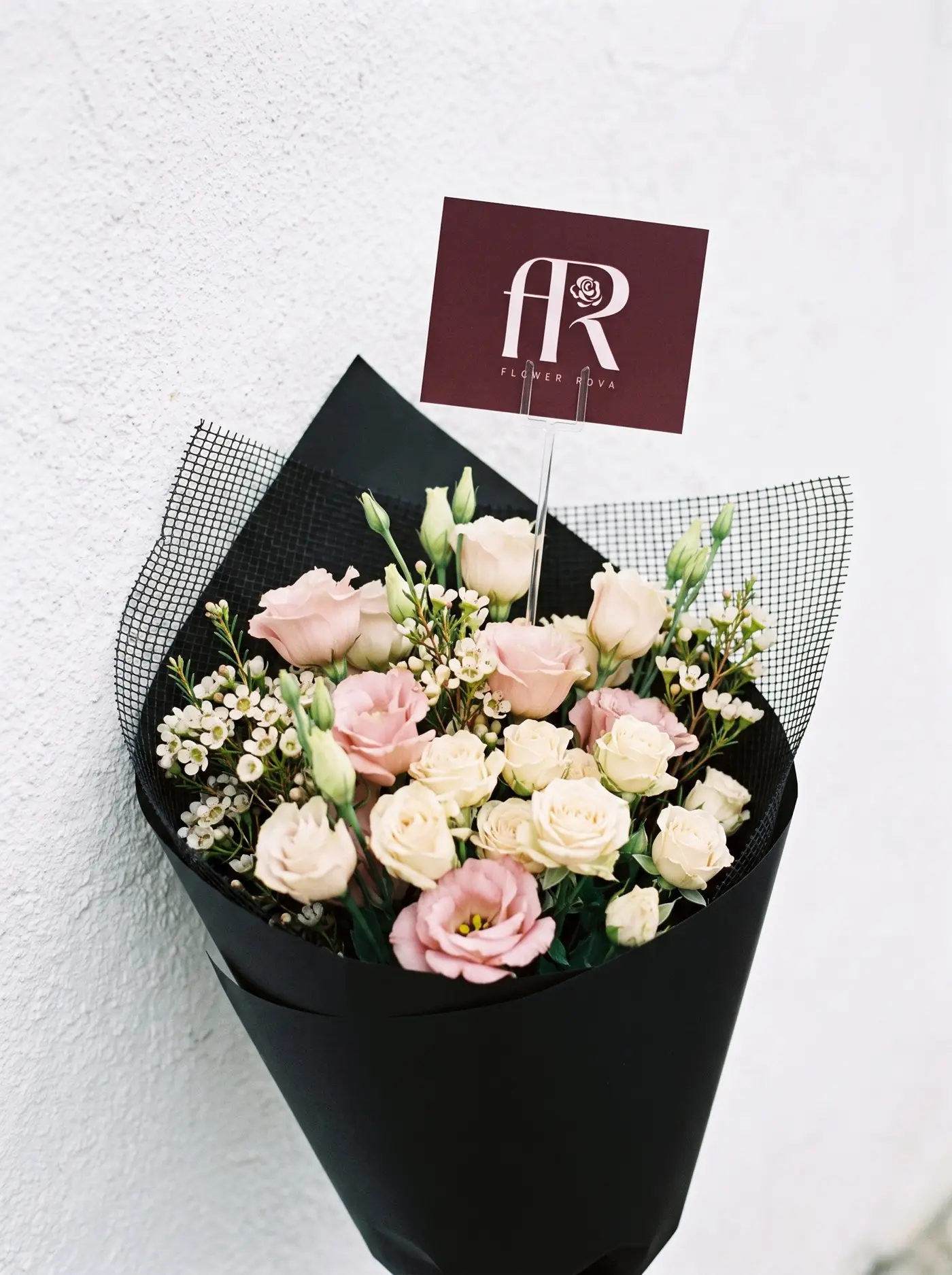
Suppose two quotes both say “twenty red roses”, but the totals differ. Before choosing, ask whether the presentation, flower specification and delivery are the same. This is a comparison method, not a report of two purchased bouquets. FlowerRova has a commercial interest in the subject; we have not run a competitor price survey or a controlled vase-life trial.
A price difference does not establish dishonesty or quality. It may reflect a different product or service, but you need the actual specifications to find out. Four useful areas to investigate are count, appearance, information about condition and the work included in the finished order.
This is a guide to which of those four you are paying for, so you can decide when the extra money is worth it and when it is not. Sometimes it isn't.
The four cost drivers
1. Stem count
Start with the quantity and composition. A rose count gives you a concrete way to compare two offers, while supporting flowers and foliage need to be described separately. For a mixed arrangement, dimensions and design can be more informative than a single total stem count.
“A bouquet of roses” can describe different counts and shapes. Ask the seller to state the number and the approximate finished dimensions. Do not infer that a lower price must mean fewer stems or that a particular baht amount normally buys a particular count. An itemised description lets you compare actual products without an invented market band.
Ask for a stated count. If the listing does not provide one, request it before comparing. A missing detail is a question to resolve, not proof that the seller is concealing something. If the exact quantity is important and cannot be confirmed, choose an offer that does confirm it.
2. Stem grade
Stem length and head size change the look and use of an arrangement. Ask what is being supplied and how it fits the intended vase or space. A tall presentation and a compact hand-tie can be different design choices rather than different levels of care or quality.
We do not have verified wholesale invoices establishing that short stems cost a fixed fraction of long stems. Nor does a shorter stem prove that the rose will open and fail sooner. Compare the variety, visible condition and specified dimensions without assigning a lifespan from a length measurement.
If stem length matters, request a measurement for the product. This guide does not define a universal Thai “premium” grade above a particular length. A manageable shorter bouquet may be preferable for a desk, while an event arrangement may need height. The brief determines which feature is useful.
3. When the flowers were cut
Timing information can be useful, but only if you know which date is being stated. Ask whether the seller means harvest, arrival at the studio or the day the arrangement is made. Those dates describe different stages and should not be treated as interchangeable.
A florist may buy from growers, importers or wholesalers, or combine routes. Ask what the seller can confirm about the flowers available for your date. Without a batch record, neither you nor this guide can assign an exact harvest age from a picture or from the business model.
FlowerRova sources through private farms in Thailand and uses imports according to the flowers and availability. For a specific order, ask what origin and variety can be confirmed. This description does not establish an exclusive farm contract, planting agreement, exact harvest date or fixed transit time. If documented provenance is essential to your brief, ask what information is available before choosing the bouquet. A documented relationship may answer an origin question, but it does not by itself prove an additional three days in the vase or a fixed difference in cost.
Do not calculate remaining vase life by subtracting assumed storage days from a universal number. Storage and handling need to be considered with the variety and condition. Ask the florist for appropriate care instructions, and assess any concern on the actual bouquet rather than assuming every older arrival was sold unfairly.
4. Labour and skill
Ask which arrangement method and presentation are included. If you want a spiral hand-tie, say so and check that the finished shape suits the recipient. We cannot establish how many minutes a florist spent from the retail price, and an exact labour-time estimate is not a substitute for seeing the result.
A simpler gathered bouquet may be appropriate when that is the agreed design. Compare the shape, stability and ease of putting it in water. A box, hand-tie and loose bunch each need their own specification; none should be described as another format simply to make the price look comparable.
What the extra money does not buy
Decide whether an extra feature is useful to your recipient. Presentation is not automatically wasteful, but it should be described clearly enough that you know what you are choosing.
A rigid box. Ask what the box contains, how the flowers receive water and whether the arrangement should stay in it. We have not verified a wholesale box price or a universal difference in vase life. If the recipient wants a ready-to-display object, the vessel may be a useful part of the purchase.
Volume of wrapping. Layered paper and ribbon can change the presentation. Ask to see the flowers and finished dimensions clearly, and choose packaging that suits the recipient rather than treating the amount of wrapping as a measure of quality.
Dyed or decorative finishes. Ask whether the colour or surface treatment is natural, dyed or added. Choose it for its appearance if the recipient likes it, not as proof of freshness. We do not have evidence for a fixed production-cost difference or a universal price premium for these finishes.
A brand and a website. Including ours: useful navigation and attractive images can make shopping easier, but they do not establish the condition of an individual order. Read the product description and terms, and distinguish an illustration from a verified customer photograph.
The price bands, honestly
We have not substantiated citywide price bands for old stock, neighbourhood shops or premium florists. A low price is not proof of poor flowers and a high price does not guarantee more life. Use the current FlowerRova catalogue as one concrete reference, then collect equivalent quotes if you want to compare sellers.
| FlowerRova bouquet | Current finished-bouquet price |
|---|---|
| 20 roses | ฿1,929 |
| 50 roses | ฿3,419 |
| 70 roses | ฿4,709 |
| 100 roses | ฿6,649 |
These figures do not promise a particular imported variety or a price that never changes. Confirm the selected product, delivery address and any special requirements in chat. Compare the final total, including any needed vessel or extras, rather than a headline price alone.
When cheap is the right answer
A simpler purchase can be the right fit when the features omitted are ones you do not need.
Flowers for your own home. Visiting a shop may let you inspect the available flowers and carry them away. Compare the actual cost and decide whether arranging them yourself is part of the enjoyment. That choice does not require an assumption that neighbourhood shops are always a third of the price.
Volume for an event you are styling yourself. Ask for a loose-flower quote and include the vessels, tools, transport and time needed to prepare them. Compare that whole plan with a finished service. Buying materials alone is a different scope, not proof that either supplier is overcharging.
A modest gesture. A thank-you to a colleague or flowers for a shared office can work at a scale that fits the space. Ask what the recipient would enjoy. There is no need to assume that nobody notices quality or that an expensive presentation is required for the message to count.
When the recipient prefers simplicity. A favourite colour, manageable size and personal card may matter more than a particular variety or box. Use that preference to choose the brief. Do not assume that a larger, cheaper bouquet is automatically better for every person without strong flower preferences.
When cheap is a false economy
A delivery you will not see. Confirm the count, presentation, receiving plan and support contact. If a photograph is important, ask whether it can be provided. Paying more does not by itself supply those services, and a lower-priced seller may be able to confirm them clearly.
A display needed across several days. Explain the intended use and ask for care guidance and a suitable flower selection. Do not infer an exact lifespan from price or guessed age. A promise of a fixed number of days should be read with its conditions, not treated as a measured comparison against another bouquet.
Occasion dates. If the date and design matter, enquire while there is time to compare options and confirm the order. Ask for a quote for the actual date rather than assuming a fixed seasonal multiplier. A normal price does not prove inferior stock, and a higher price does not establish freshness. We have not verified a universal February sell-out date or a market-wide doubling of wholesale prices.
Funerals. Follow the family’s wishes and funeral notice. Confirm whether flowers are wanted, the actual venue, the receiving time and the sender wording. Ask about any colour or material preference rather than imposing one rule on every family. A florist should work to the confirmed brief, including a decision not to send flowers.
A worked comparison
Take two real quotes for the same rose count, colour, date and address. Record the details below rather than filling the cheaper column with assumed faults.
| Question | What to compare |
|---|---|
| What flowers? | Rose count, colour and any required variety |
| What size? | Stem length where relevant, finished dimensions |
| What presentation? | Hand-tie, box or vase, wrapping and card |
| What delivery? | Requested day, address, recipient handover |
| What total? | Bouquet, required extras and delivery charges |
| What changes? | Substitutions and approval |
| What support? | Contact for damage, error or delivery concern |
FlowerRova’s 20-rose bouquet is ฿1,929. A competitor column should come from that seller’s current quote. We cannot fill in a day-six outcome or claim that one option has no recourse without evidence.
The three questions
Start a price comparison with three questions, then follow up on the actual offer:
- How many stems, and how long are they?
- Where were these grown, and when were they cut?
- Is delivery included, and is it hand-tied?
Three specific answers give you a clearer basis for comparison. Follow up where a term is vague, and distinguish information that can be confirmed from information the florist does not hold. A price comparison may also need the delivery and presentation details above.
Where we sit
FlowerRova sources through private farms in Thailand and uses imports according to the flowers and availability. For a specific order, ask what origin and variety can be confirmed. This description does not establish an exclusive farm contract, planting agreement, exact harvest date or fixed transit time. If documented provenance is essential to your brief, ask what information is available before choosing the bouquet.
Ask us to confirm count, presentation and delivery details in writing. If you need a photograph before dispatch, agree whether that can be provided and when you can respond. A catalogue illustration is not a photograph of your order or evidence of a customer's experience.
Because flowers are perishable, FlowerRova does not offer refunds or exchanges for a change of mind. If flowers are damaged, wrong, undelivered or raise a freshness concern, contact the team with the order details and photographs where available. That contact process remains available; a change-of-mind rule should not be read as a reason to ignore a fulfilment problem. Read the current order terms before paying.
Choose presentation from the actual product options. Do not assume every FlowerRova bouquet uses one fixed wrapping style or excludes boxes. The catalogue and your agreed brief describe the finished object.
If price is the priority, compare equivalent current quotes and consider a simpler design or collection where offered. We do not claim to know the cheapest florist in Bangkok or a best weekday to buy. Use condition checks without treating them as proof of harvest age.
Frequently asked questions
Is a higher price worth it? It can be if the extra flowers, design or service matter to your brief. Ask what changes between tiers rather than assuming the uplift buys freshness.
How can I spend less? Request a smaller count, a simpler presentation or another available flower combination. Keep essential exclusions and delivery requirements clear. Compare a revised quote with the original so you know what changed.
Do expensive flowers last longer? Price alone cannot establish that. We have not run comparable trials controlling variety, handling and care. Follow the supplied instructions and report problems with the actual order.
What is the minimum for a decent gift? There is no substantiated universal threshold. Choose a gift that fits your budget and the recipient’s preferences. A personal card does not require the largest arrangement.
More detail: why quotes differ and what premium should mean.
Check availability for the actual date
For an order on a particular date, ask which flowers are available and how long the quote remains valid. We do not use a calendar rule that declares cheap flowers safe in December and poor in August. The useful information is the condition and specification of the flowers being offered.
If a favourite variety is unavailable, decide whether colour, shape or origin matters most. Request a separately confirmed alternative rather than allowing a vague instruction to change every part of the bouquet. If the exact flower is essential, say so before payment. A clear limit gives the seller a chance to confirm the brief or explain that it cannot be met.
What a guarantee is actually worth
Read the scope and process of the promise. Check what qualifies as a concern, how to contact the seller and which information is requested. A duration alone does not tell you whether it applies to every flower, to arrival condition or to another defined issue.
Do not assume a short claim period is meaningless or that a request for photographs proves the seller intends to obstruct complaints. Keep the order confirmation and a factual account of what arrived. Ask if anything is unclear before ordering.
Because flowers are perishable, FlowerRova does not offer refunds or exchanges for a change of mind. If flowers are damaged, wrong, undelivered or raise a freshness concern, contact the team with the order details and photographs where available. That contact process remains available; a change-of-mind rule should not be read as a reason to ignore a fulfilment problem. Read the current order terms before paying.
Comparing value over time
If you want to compare value over time, use observations from actual flowers in your own setting. Record the total paid, arrival condition, placement and care, and decide what “presentable” means for that use. A dinner centrepiece and a desk arrangement may have different goals.
Do not predict an eight-day premium bouquet and a three-day cheap bouquet, then present the arithmetic as evidence that the premium purchase is cheaper. Without measured outcomes, that is an invented comparison. Even observations from two orders would need care in interpretation because varieties and room conditions can differ.
For a one-evening event, choose the appearance and service needed for that evening. For an ongoing display, ask about care and replacement planning. Both can be sensible purchases when the brief, total and expectations are clear.