

Flower Delivery Apps vs Local Florists in Bangkok: Which Actually Delivers
Compare app and direct-florist ordering through product details, maker communication, delivery confirmation, payment and support—not channel-wide claims.
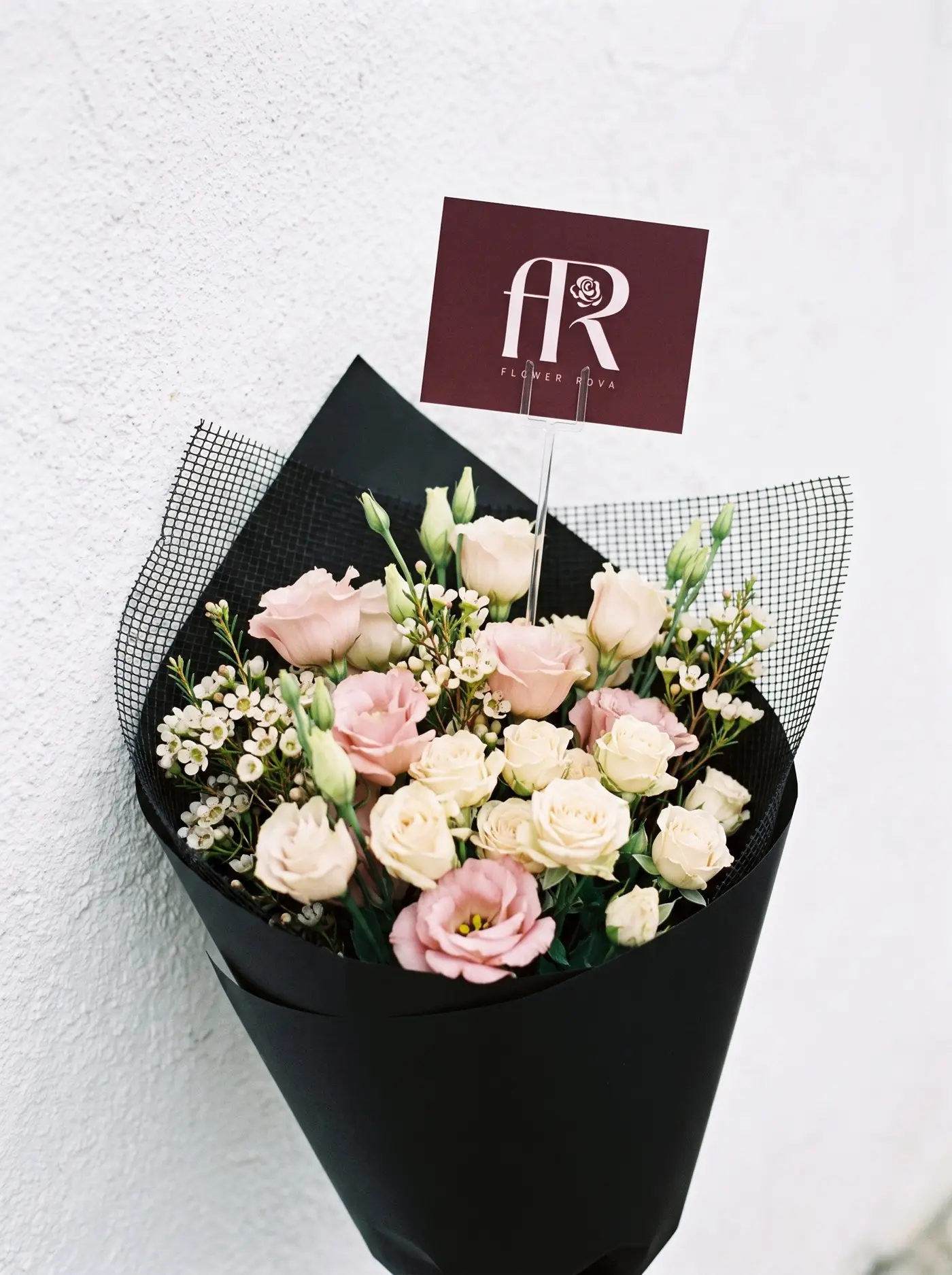
Ordering through an app can be convenient, while messaging a florist can give you room to explain the brief. Compare the services you need rather than assuming the interface determines the flowers. This FlowerRova guide is not based on comparative test orders, a complaint survey or records of platform commissions.
The useful comparison includes convenience, product detail, receiving arrangements and support. Decide which of those matter for this order before choosing a channel.
Identify who makes the bouquet
Before comparing, find out whether the service makes its own arrangements, lists partner shops or combines both models. The answer should help you identify the maker and support contact; it cannot predict the quality of every bouquet.
A vertically integrated service operates its own studio. It buys the flowers, employs the florists, makes your bouquet, and delivers it. The app is a shopfront for a real operation.
An order-gathering platform takes your money and routes the job to a partner florist near the delivery address. The app is a marketplace. Ask how the partner receives the brief and confirms changes.
Both can be legitimate arrangements. Check how the selected service explains fulfilment and what it will confirm for your order. Do not assume that every platform hides its partners or that every direct seller personally handles each step.
A useful first question: “Who physically makes the bouquet, and where?” Ask how you can resolve a design question with that maker. A named partner and a direct studio can both give useful answers; a reply that needs checking is not proof that the order will be poor.
Convenience features to check
Consider these features if convenience is a priority. Verify each one with the service rather than treating the list as a promise about all apps.
Coverage. Check the complete destination address and the requested day. If a platform has an appropriate partner at that location, it may be a useful option. A country or city name in a headline does not establish service at every address, and a studio may have arrangements beyond what you first assumed.
Tracking and confirmation. Ask what the status labels mean. “Dispatched” is different from “received at reception”, and neither necessarily means the recipient has collected the bouquet. Choose the confirmation you need and check whether it is available in the app, by message or through a support contact.
Payment. Check which methods are accepted for your country and whether any charge applies. An app may offer a convenient method, while a studio may have a usable payment arrangement too. Confirm the payee and final amount before completing payment rather than relying on assumptions about bank transfer or cards.
Support and terms. Read the seller’s contact process for wrong, damaged or undelivered orders. Ask your payment provider about protections if they matter to your decision. A platform label does not guarantee a refund, and a small studio does not automatically leave you without a route to raise a concern.
Speed of decision. A well-described product can make a straightforward order easier. Still check count, colour, address and date before payment. A fast interface is useful only if the order it records is the one you intend to place.
Reviews. Read what a rating covers and look for specific accounts of actual orders. A large number of stars may be less useful to your brief than clear information about the relevant product or maker. Do not treat a score as a guarantee for the next order.
If the chosen app confirms those requirements and the product suits the recipient, it may be the right route. Continue checking the design and receiving plan before paying.
Five product questions for either route
1. What does the photograph represent?
Ask whether the image represents the exact size and design, a styled example or an illustration. If a particular flower or colour is essential, confirm it in the written order. Do not assume the maker never saw the image or that using a partner necessarily changes the bouquet.
A mismatch can have several explanations, including an unclear specification or an agreed substitution. We do not have complaint data establishing the leading cause across online floristry. Keep the product description and any approvals so the seller can compare the actual delivery with what was agreed.
2. What origin and timing information is available?
Ask about the actual flowers available for the order, whether Thai-grown or imported, and any date information the seller holds. A harvest date, an arrival date and an arrangement date describe different stages. A platform or a direct seller may need to check with a supplier; an honest limit is better than a guessed date.
Do not calculate an exact remaining vase life from a guessed age. Condition, variety, handling and the recipient’s care all need consideration. A country label or a confident sourcing claim cannot establish what the bouquet will look like on a particular future day.
3. What is fixed in the design?
A catalogue can provide a clear starting point for colour, count and presentation. Ask which details are fixed and which may vary. For a custom arrangement, record the essential features just as carefully; a flexible brief should not leave the seller guessing about a flower that must be avoided.
If the preferred flower is unavailable, ask for the proposed alternative before approving it. A fixed product can have a clear substitution process, and a custom studio can still misunderstand a vague brief. Neither design model automatically gives better flowers for the same budget.
4. What does the confirmed total include?
Compare equivalent flower counts, dimensions, presentation and delivery. We do not have contracts or invoices showing how a platform’s charges affect a particular bouquet, so we cannot infer fewer stems from the channel. An actual product specification is stronger evidence than a guessed margin.
5. How are special instructions confirmed?
Find the route for instructions that are not part of the card: a flower to avoid, a room constraint or a hospital receiving rule. Ask whether the maker has acknowledged them. You need that confirmation whether instructions are entered in a form or sent by message. A free-text field alone does not establish that an exclusion was accepted.
Destination details to settle with either service
Condominium receptions. Ask whether the building accepts flowers and how the resident will be notified. Agree the receiving point and whether a personal handover is needed. A photograph at reception may show arrival at the building, but it does not prove the resident collected the bouquet. Do not assume a particular courier category always handles this well or badly.
Address detail. Provide the building name, full address, tower where needed and a map pin. Add a recipient contact and any permitted access instructions. Review the final recorded address after submitting a form or message; neither method is immune to a mistyped number or a missing entrance detail.
Transport and waiting. Ask how the bouquet will be protected and what to do if the recipient cannot collect promptly. Match the plan to the arrangement and destination. We have not measured flower damage across delivery fleets and do not present a hypothetical hot-box journey as a real customer experience.
Holiday dates. Ask the seller and destination about the requested day, receiving arrangements and any access restrictions. We have not verified a market-wide closure or farm shutdown. An event near the address may affect access, so use current information from the organiser rather than assuming every courier or florist follows the same schedule.
A worked example
Use the same request with both sellers: twenty red roses, hand-tied, for the same requested day and condominium address. The comparison is a worksheet, not a record of two deliveries.
FlowerRova’s current 20-rose price is ฿3,299. For another service, record the actual product price, count, wrapping, vase if needed and delivery charge. Do not assign it an invented price or assume it will supply fewer roses than ordered.
Ask both who receives the bouquet, what confirmation is available and how changes are approved. If one offers a service the other does not, decide whether that service matters to this gift. You cannot infer a day-six outcome or a quality advantage from the price difference alone.
When each is right
Consider an app when its supported payment, confirmed coverage, product description and order-management features suit the job. Check that special instructions have a route to the maker and that you can contact support if the destination changes.
Consider direct ordering when you want to discuss a detailed brief and the florist can confirm the product and delivery plan. Ask about payment, photographs and the backup contact rather than assuming they are included.
For a hospital, get ward permission before either route. For a wedding or installation, request a separate scope. The emotional importance of an occasion does not establish that one channel is inherently better.
How to use an app well, if you use one
Not everything here is "come to us instead". If an app is the right tool:
- Consider a flexible brief if exact varieties are not essential. Confirm the colour, size and exclusions; flexibility is not a guarantee of better flowers.
- Put the recipient's phone number in. Every time.
- Use the building name, not just the soi.
- Confirm the requested day and receiving arrangements. Discuss an event deadline in chat; do not infer an exact clock-time promise.
- Read the substitution policy before you are surprised by it.
- Check whether reviews mention the specific shop or only the platform.
Where we sit
FlowerRova sources through private farms in Thailand and uses imports according to the flowers and availability. For a specific order, ask what origin and variety can be confirmed. This description does not establish an exclusive farm contract, planting agreement, exact harvest date or fixed transit time. If documented provenance is essential to your brief, ask what information is available before choosing the bouquet.
FlowerRova offers delivery on the customer’s requested day, including same-day. Send the quantity, flowers, date and address in chat to confirm the details. We do not promise an exact clock-time slot or impose a published 24-, 48- or 72-hour minimum by rose count. For a venue deadline, explain when the flowers are needed so the team can discuss a workable handover before you pay.
Because flowers are perishable, FlowerRova does not offer refunds or exchanges for a change of mind. If flowers are damaged, wrong, undelivered or raise a freshness concern, contact the team with the order details and photographs where available. That contact process remains available; a change-of-mind rule should not be read as a reason to ignore a fulfilment problem. Read the current order terms before paying.
Compare FlowerRova with the actual alternative available for your address and brief. We do not claim to beat every app on flower condition or lose to every app on range. Use the current catalogue, confirmed total and agreed service details as the basis of your choice.
Frequently asked questions
Are apps reliable? Assess the selected service’s actual fulfilment details and relevant customer evidence; this guide does not establish a channel-wide reliability rate.
Why might an order differ from a picture? Compare the image description, written specification and any substitution approval with the delivery. Ask the seller to explain rather than assuming the maker never saw the reference.
Is app delivery more expensive? Obtain equivalent current totals. A channel alone does not establish count, margin or value.
Can I request same-day? FlowerRova offers delivery on the customer’s requested day, including same-day. Send the quantity, flowers, date and address in chat to confirm the details. We do not promise an exact clock-time slot or impose a published 24-, 48- or 72-hour minimum by rose count. For a venue deadline, explain when the flowers are needed so the team can discuss a workable handover before you pay.
Can a service deliver outside Bangkok? Check the exact address with that service. A national headline is not sufficient confirmation.
Read six buying routes for a broader comparison.
Using different services for different jobs
You do not have to choose a single channel for every order: use different services for different jobs.
You can use different services for different jobs. A routine order may fit a well-specified catalogue product, while an unusual colour match may benefit from a conversation. An unfamiliar destination may require another supplier entirely. Choose on the confirmed requirements rather than assuming a particular channel belongs only to low-stakes or important occasions.
There is no need to use the same route every time. Keep a record of what worked for a previous order, but check current availability and terms for the next one. A successful bouquet does not automatically establish wedding capacity, and an elaborate gift does not require abandoning a service that can meet the brief.
What "premium" means on a platform
Compare the named tiers in the actual listing. “Premium” may refer to more flowers, a different variety, a larger vessel or another feature; the label is not a universal specification. Ask what changes from the standard option and whether the images show the corresponding sizes.
Do not assume an upgrade buys either freshness or only quantity without reading the offer. If the desired feature is a vase, ask whether it is included. If it is a specific flower, confirm that flower. If it is easier receiving, compare delivery arrangements. Pay for the difference you need, not an imagined improvement that the seller has not promised.
Substitution: the policy to actually read
A flower may be unavailable, so read the substitution process before choosing. Decide which features may change and which are essential. The question is how the seller obtains agreement, not whether every florist follows one practice.
What varies is how it is handled, and there are three tiers:
A change without approval. If a delivery differs from the agreed specification, contact the seller with the confirmation and photographs. Do not assume this is standard for routing platforms or that a direct seller cannot make a mistake.
Disclosed after dispatch. You get an email saying items were substituted. Better, but too late to decide.
Agreed before a change is made. The florist explains the unavailable detail and asks you to approve an alternative. Ideally settle known changes before payment; a later availability problem still needs the agreed approval process before making the bouquet.
Ask how approval works with the chosen service: a message, a call or an order-management step. A platform can provide communication and a direct seller still needs to record the answer. If you will be unavailable, agree acceptable alternatives before the order is made.
For FlowerRova, discuss any required variety, colour or exclusion in chat before payment. Ask what is being confirmed and keep the final brief together. We do not present a claim about lost seasonal orders as evidence of our substitution process.
Reading platform reviews properly
Ratings at volume are genuinely useful, with two caveats.
Check what the reviews cover. A rating may apply to a platform, a shop or a product. An average is not a median and does not predict the next order. Read the service’s explanation and look for relevant details, especially if a partner will make the bouquet.
Look for verifiable customer photographs. A photo can help when its origin and connection to the order are clear. Casual lighting or a hand in frame does not establish a real delivery. Distinguish illustrations, styled examples and actual customer submissions, and do not infer misconduct simply from a small number of photographs.
Read a range of specific reviews and any seller responses. A description of a problem may identify something to ask about, but it does not prove the cause was routing, sourcing or courier judgement. Keep your own review factual: what was ordered, what arrived and how the concern was handled.